Light Pole Corrosion: Causes, Warning Signs, and Failure Risks
Light pole corrosion does not begin at a specific age. A pole’s condition depends on much more than how many years it has been in service.
A pole’s condition depends on much more than how many years it has been in service. The pole material, protective coating, installation, drainage, irrigation exposure, environmental conditions, physical damage, and maintenance history can all affect how quickly corrosion develops.
We have seen galvanized poles that were still in good condition after 50 years. We have also seen poles installed in planters become badly corroded after only a few years because dirt and irrigation kept moisture around the base.
In another case, a powder-coated pole that had been installed for more than 20 years remained in good condition, while a similar powder-coated pole developed severe rust in less than two years after being repeatedly exposed to irrigation water.
The age of a light pole matters, but age alone does not tell you whether a pole is in good condition.
Key Takeaways
- There is no universal age at which a light pole will begin to rust.
- Moisture, drainage, irrigation, coatings, installation conditions, and physical damage can influence corrosion.
- The base of a steel light pole is particularly vulnerable because moisture can collect around the pole shaft, base plate, anchor bolts, and footing.
- Some serious corrosion can develop inside a pole and may not be obvious from the exterior.
- Rust, holes, damaged coatings, movement, cracked welds, and deteriorated anchor hardware are conditions that deserve attention.
- Significant corrosion should be evaluated before a damaged pole is simply covered, repaired, or returned to service.
Does the Age of a Light Pole Affect Its Risk of Corrosion?
Older poles have had more time to experience weather, moisture, irrigation, impacts, and deterioration, so age can certainly be a factor.
But it is not a reliable way to determine the condition of a pole.
Two poles of approximately the same age can be in completely different condition depending on where they are installed and what they have been exposed to.
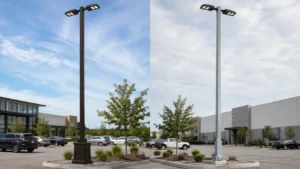
For example, a galvanized steel pole installed in a well-drained area may remain in good condition for decades. A much newer painted or powder-coated pole installed in a planter where irrigation repeatedly wets the base may deteriorate much faster.
This is why pole condition should be evaluated based on the pole itself and the conditions around it rather than assuming that a newer pole is safe from corrosion or that an older pole automatically needs replacement.
For more information about different pole materials, construction methods, and common types of damage, see our guide to light pole materials, construction, and damage.
What Causes Light Pole Corrosion?
Steel corrodes when the conditions necessary for oxidation are present, but several job-site and environmental factors can make the problem worse.
Common conditions associated with light pole corrosion include:
- Standing or trapped water
- Landscape irrigation repeatedly hitting the pole
- Reclaimed water
- Poor drainage around the pole base
- Moisture collecting inside the pole
- Damaged paint or protective coatings
- Dirt or landscaping material piled around the pole
- Poles installed in low areas where water collects
- Physical damage that breaks the protective coating
- Missing or damaged pole components that allow additional moisture into the pole
A pole can therefore develop corrosion even when the rest of the property appears properly maintained.
One of the most important areas to examine is the bottom of the pole.
Why Light Pole Bases Are Vulnerable to Corrosion
The base of an anchor-mounted light pole contains several important components concentrated in a relatively small area:
- Lower portion of the pole shaft
- Weld between the pole shaft and base plate
- Base plate
- Anchor bolts
- Nuts and washers
- Concrete footing
It is also an area where moisture can become trapped.
Rainwater, irrigation, and condensation can enter or develop inside a pole. If the installation does not provide an appropriate drainage path, water may remain around the bottom of the pole.
Material underneath the base plate can sometimes make the problem worse if it prevents accumulated water from escaping.
This does not mean grout or dry pack automatically causes corrosion. The concern is when the installation prevents proper drainage and keeps moisture in contact with steel components.
For more information about proper clearance around the pole base, see why light poles shouldn’t be set directly on concrete.
Our guide to light pole drainage and base corrosion explains in more detail how water can accumulate inside a pole and why maintaining an appropriate drainage path is important.
Rust Can Develop Inside a Light Pole
One of the more difficult aspects of light pole corrosion is that the most serious deterioration is not always visible from the outside.
A pole may appear relatively normal externally while moisture inside the pole gradually corrodes the steel from the inside out.
As the corrosion progresses, the wall thickness of the steel can decrease.
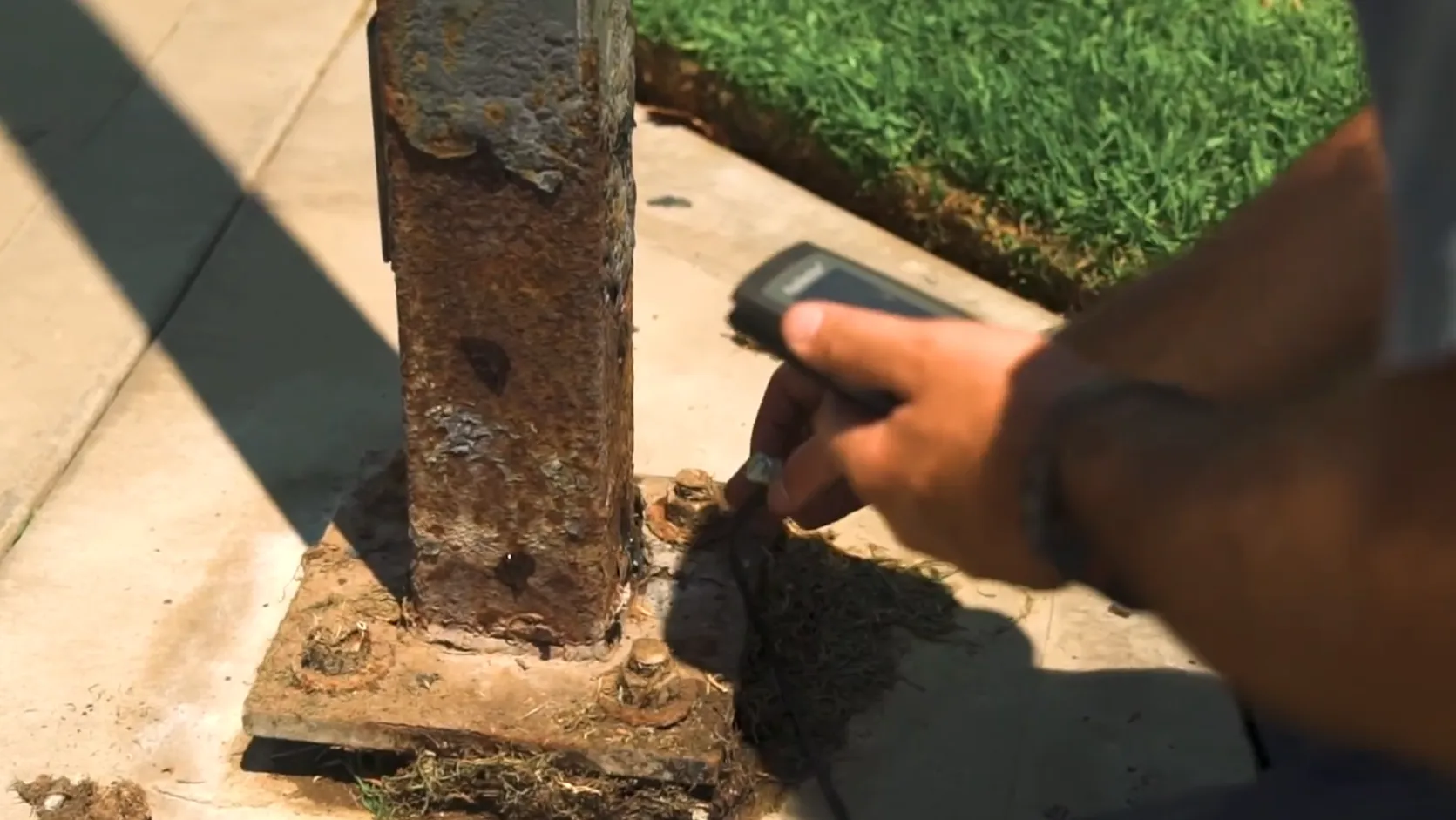
Ultrasonic testing is one method qualified technicians can use to measure the remaining thickness of the metal at specific areas of a pole. The measurements can help determine whether areas of the pole have experienced significant material loss.
Video: Ultrasonic Testing and Pole Inspection Overview
The important point is that appearance alone does not always tell the complete story.
Visible rust should receive attention, but a lack of obvious exterior rust does not necessarily prove that every part of a pole is in good condition.
Warning Signs of Light Pole Corrosion or Damage
There are several conditions that can indicate a light pole should receive closer attention.
Some of the more obvious warning signs include:
- Rust around the bottom of the pole
- Rust holes in the pole shaft
- Severely corroded base plates
- Rusted or deteriorated anchor bolts
- Corroded nuts and washers
- Rusted base covers
- A pole moving excessively in the wind
- Broken or missing anchor hardware
Other warning signs may be less obvious:
- Peeling or bubbling paint
- Cracks near the pole base
- Cracks in welds
- Dents in the pole shaft
- Missing nuts or washers
- Damage to the protective finish
- Corrosion concealed beneath a base cover
None of these conditions should automatically be interpreted as proof that a pole is about to fail. They are signs that the condition of the pole and its supporting components may require further evaluation.
Video: How To Identify A Damaged Pole
The video demonstrates several of the conditions that can be seen when reviewing an existing light pole and explains why seemingly small problems around the base should not always be ignored.
Conditions That Can Increase the Risk of Pole Damage
Corrosion is not the only issue that can affect the long-term condition of a light pole.
When reviewing poles around a property, also pay attention to the environment surrounding them.
Potential problem conditions can include:
Landscape Irrigation
Repeated irrigation can keep the lower portion of a pole wet for long periods. Reclaimed water and sprinkler systems directed toward the pole can create especially harsh exposure conditions.
Low Areas of a Property
Poles installed where landscaping or pavement directs water toward the footing may experience greater moisture exposure.
Dirt or Landscaping Around the Base
Soil, mulch, or other landscaping material piled against the pole can trap moisture and conceal developing corrosion.
Vehicle Traffic
Poles positioned near delivery routes, loading areas, parking spaces, or garbage-truck paths are more likely to experience impacts.
Even an impact that does not knock the pole down can dent the shaft, damage the coating, affect the base, or create another location where corrosion can begin.
Missing Pole Caps or Hand Hole Covers
Missing components can expose the interior of the pole to additional moisture and debris.
Damaged Protective Coatings
Paint, powder coating, or galvanizing helps protect steel from environmental exposure. For a closer comparison of these finishes, see powder coated vs. galvanized light poles. Once that protective layer is damaged, the exposed area can become more susceptible to corrosion.
Understanding these conditions is part of preventing the kinds of issues discussed in our guide to common light pole problems.
How Often Should Light Poles Be Checked?
Light Pole Systems has traditionally recommended inspecting light poles approximately every three years as a general maintenance practice, with known problem poles reviewed annually.
However, there is no single inspection interval appropriate for every property.
Conditions such as frequent irrigation, coastal exposure, physical impacts, known corrosion, previous repairs, unusual movement, or other site-specific concerns may justify more frequent evaluation.
Property owners and maintenance teams should also follow applicable manufacturer requirements, engineering recommendations, maintenance programs, and project-specific requirements.
The important part is not to wait until severe deterioration becomes obvious from a distance.
Regularly looking at the pole base, protective coating, anchor hardware, drainage conditions, and surrounding environment can help identify developing problems earlier.
What Should You Do If You Find Significant Light Pole Corrosion?
Do not simply cover significant corrosion with a decorative base cover or new coat of paint without first understanding what is underneath.
Surface rust and structural deterioration are not the same thing.
The appropriate response depends on factors such as:
- Location of the corrosion
- Depth and extent of metal loss
- Pole material and dimensions
- Condition of the base plate
- Condition of the welds
- Condition of the anchor bolts
- Condition of the concrete footing
- Pole height and loading
- Project requirements
If significant deterioration or structural damage is suspected, the pole should be evaluated by an appropriately qualified professional.
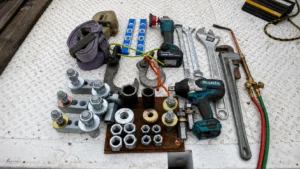
Depending on the condition of the pole, replacement may be necessary. If replacement is required, review our guide to light pole replacement tools for equipment commonly used during removal and installation.
For certain applications where corrosion has damaged the lower section of an otherwise suitable light pole, Light Pole Systems also manufactures a Pole Repair Kit for rust-damaged light poles. The system is designed for specific pole sizes and applications, so the condition and dimensions of the existing pole should be reviewed before determining whether the product is appropriate.
Pole Age Is Only One Part of the Story
There is no simple answer to the question, “How old does a light pole have to be before it rusts?”
A decades-old galvanized pole may still be in excellent condition.
A much newer pole can develop significant corrosion if its coating is damaged, its base remains wet, drainage is blocked, or irrigation continually exposes it to moisture.
Instead of judging a pole only by its age, look at how it was installed, what conditions surround it, whether water can drain properly, and whether there are visible signs of corrosion or damage.
Catching those conditions early can prevent a relatively manageable light pole problem from becoming a much larger one.
If you are dealing with corrosion, damaged anchor hardware, or another unusual light pole problem and need help identifying an appropriate Light Pole Systems product, contact the Light Pole Systems team.
We pride ourselves on providing excellent customer service and look forward to helping you with any of your light pole needs.
Get a Quote