Light Poles: More than Just Holding a Light
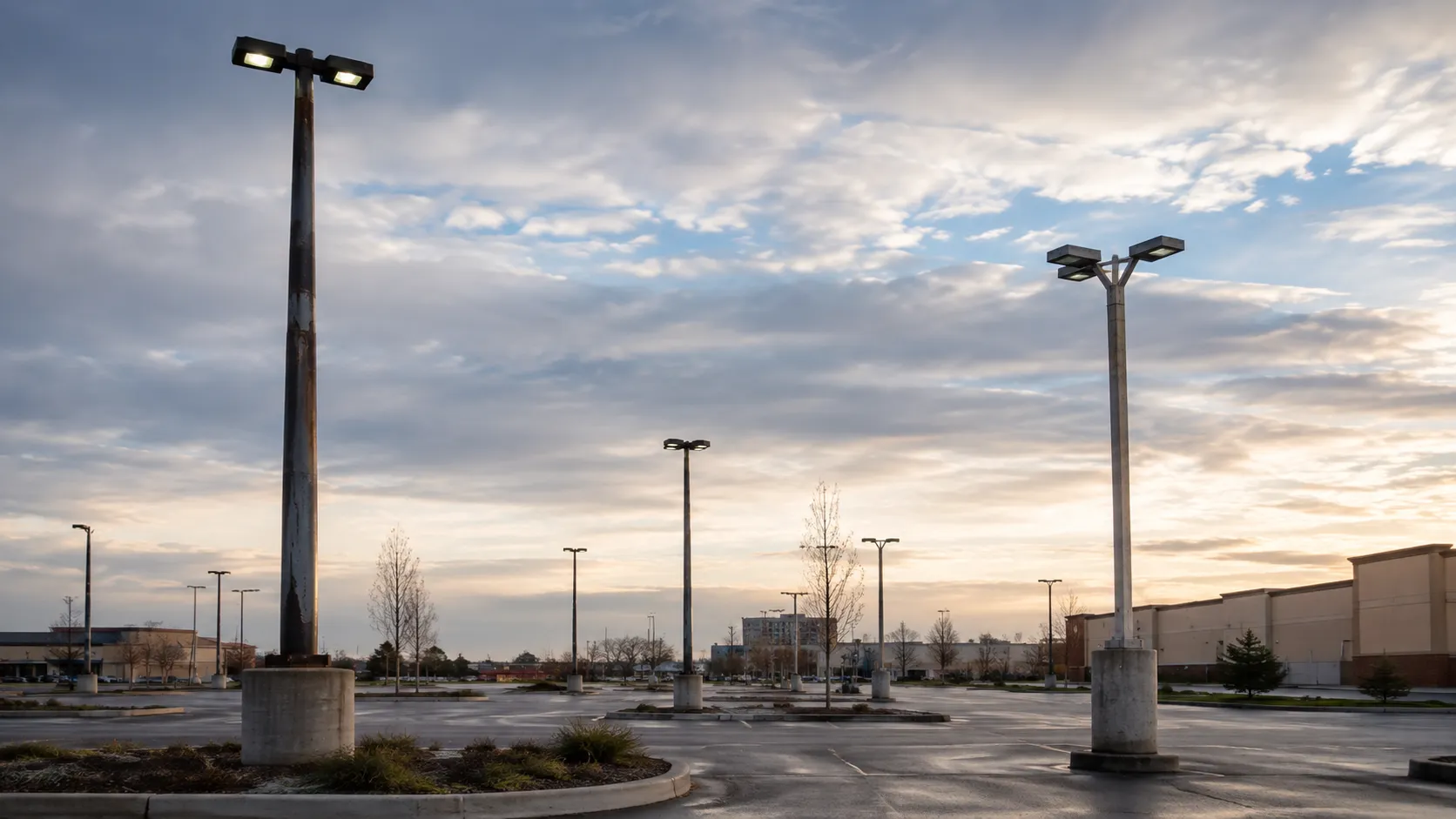
Light poles are a crucial part of everyday infrastructure. They light our roads, parking lots, walkways, commercial properties, schools, sports facilities, and public spaces. Yet most people rarely think about them until something goes wrong.
Light poles rust. They get hit by vehicles. They can be damaged by weather, installation problems, corrosion, or years of exposure to the elements. And because they usually just sit quietly doing their job, maintenance personnel may not notice a developing problem until the damage becomes serious.
At Light Pole Systems, we spend a lot of time thinking about light poles.
This article is the first in a series covering how light poles are made, how they are installed, how they become damaged, and some of the problems contractors and maintenance professionals encounter in the field.
Once you know what to look for, you may never walk through a parking lot without looking at the light poles again.
A Light Pole Is Just a Light Pole, Right?
Not exactly.
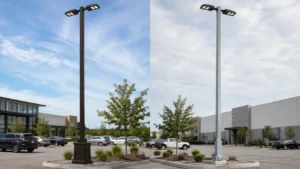
Light poles come in many different materials, shapes, sizes, and construction methods depending on where and how they will be used.
Common light pole materials include:
- Steel
- Aluminum
- Concrete
- Fiberglass
- Carbon fiber
- Plastic
Light poles can also be manufactured in many different shapes, including:
- Round
- Square
- Tapered
- Octagonal
- Hexagonal
- Fluted
Depending on the material and design, poles may be extruded, cast, poured, wrapped, cold rolled, welded, or stamped.
For a closer look at the manufacturing process, see our guide on how steel light poles are made.
For projects requiring specific dimensions, materials, or configurations, Light Pole Systems also provides custom light poles for commercial, municipal, and other specialized applications.
How Concrete Light Poles Are Made
Consider a typical concrete street light pole.
Concrete poles are constructed using concrete, steel cable, and steel tie wire. Steel cables run along the length of the pole, while tie wire is wrapped around the cables. Concrete is then poured into the mold.
The cables are stretched and tightened to provide additional strength to the finished pole.
Although the finished product may look simple from the outside, there is considerably more happening inside the pole than most people realize.
What Happens When Light Poles Get Hit?
Vehicle impacts are another reality of exterior lighting systems.
We once encountered a 20-foot concrete street light pole that had been struck along the side of a road. When the vehicle hit the pole, the concrete broke apart and the pole came down onto a Lincoln parked nearby.
And, as seems to happen far too often, the pole managed to find the only car around.
The impact crushed the roof and prevented the vehicle’s doors from opening. Fortunately, nobody was inside.
Had someone been in the vehicle, emergency personnel may have needed specialized equipment, potentially including a crane, to safely lift the pole from the car.
It is a dramatic example, but it demonstrates why the condition and location of light poles should never be treated as an afterthought.
How to Identify a Damaged Pole
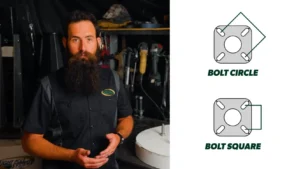
Damage to a light pole is not always immediately obvious. Vehicle impacts, corrosion, cracks, deformation, and other conditions can affect the integrity of a pole over time. This video provides an overview of some of the signs to look for when evaluating a damaged light pole.
Why Light Poles Rust at the Base
Rust is one of the most common problems affecting steel light poles.
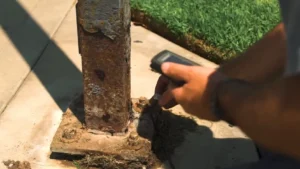
During installation, contractors may place dry concrete, commonly referred to as dry pack, underneath the pole base to help support it.
Water and moisture around the base of a pole can eventually contribute to corrosion. Over time, severe corrosion can weaken the pole enough that it becomes a structural problem.
For more detail on causes, warning signs, and deterioration risks, see our guide to light pole corrosion.
And naturally, when a pole finally falls in a crowded parking lot, it seems determined to locate the most expensive vehicle available.
Joking aside, corrosion around the base of a light pole deserves attention because deterioration can continue long before the problem becomes obvious.
Light Pole Systems developed its Pole Repair Kit specifically for repairing rust-damaged light poles. The galvanized system is designed to reinforce deteriorated poles without requiring the entire pole to be removed and replaced.
Ultrasonic Testing for Light Poles
Some types of deterioration may not be visible from the outside of a light pole. Ultrasonic testing is one method used in the industry to evaluate the condition and thickness of the pole material and help identify areas affected by corrosion or deterioration.
Protecting Light Pole Hand Holes
Another vulnerable area of a light pole is the hand hole near the base. Hand holes provide access to wiring and electrical connections inside the pole, but standard covers can be removed, damaged, or stolen.
In areas where copper theft and vandalism are concerns, a more secure cover can help restrict unauthorized access to the wiring inside the pole.
For additional prevention strategies, see our guide to preventing copper wire theft from job sites.
Light Pole Systems offers a Universal Locking Hand Hole Cover designed to provide a more secure replacement for standard light pole hand hole covers.
Light Poles Are More Complicated Than They Look
Light poles may appear simple, but everything from their material and manufacturing process to their installation and long-term exposure can affect how they perform.
Over this series, we’ll explore more of the problems we see in the field, including installation issues, corrosion, damaged poles, anchor bolt problems, copper-wire theft, and practical solutions for keeping exterior lighting infrastructure operating safely.
If you’re dealing with an existing light pole problem or working on a new project, you can also explore our light pole products and solutions
We pride ourselves on providing excellent customer service and look forward to helping you with any of your light pole needs.
Get a Quote