Light poles can create unexpected problems for electrical contractors, distributors, property managers, facility teams, and property owners.
Many of the questions we receive about light pole replacement and installation can be traced back to three common issues:
- The new light pole base does not match the existing anchor bolt pattern.
- The light pole is damaged during shipping.
- The required pole is not readily available and has a long lead time.
Understanding these problems before ordering a replacement light pole can help prevent delays, additional costs, and installation complications.
1. The Light Pole Base Does Not Match the Existing Anchor Bolt Pattern
One of the most common problems when replacing a light pole is discovering that the base plate of the new pole does not match the anchor bolts already installed in the concrete footing.
This often happens because someone assumes that light poles of a similar size will use the same anchor bolt pattern.
Unfortunately, that is not always the case.
Older Light Poles May Have Different Bolt Patterns
Bolt circles used on older properties were often larger than many of the bolt circles commonly used today.
Even among newer poles, different light pole manufacturers may use different base plate dimensions and anchor bolt patterns.
For this reason, the existing anchor bolt pattern should be measured before ordering a replacement pole.
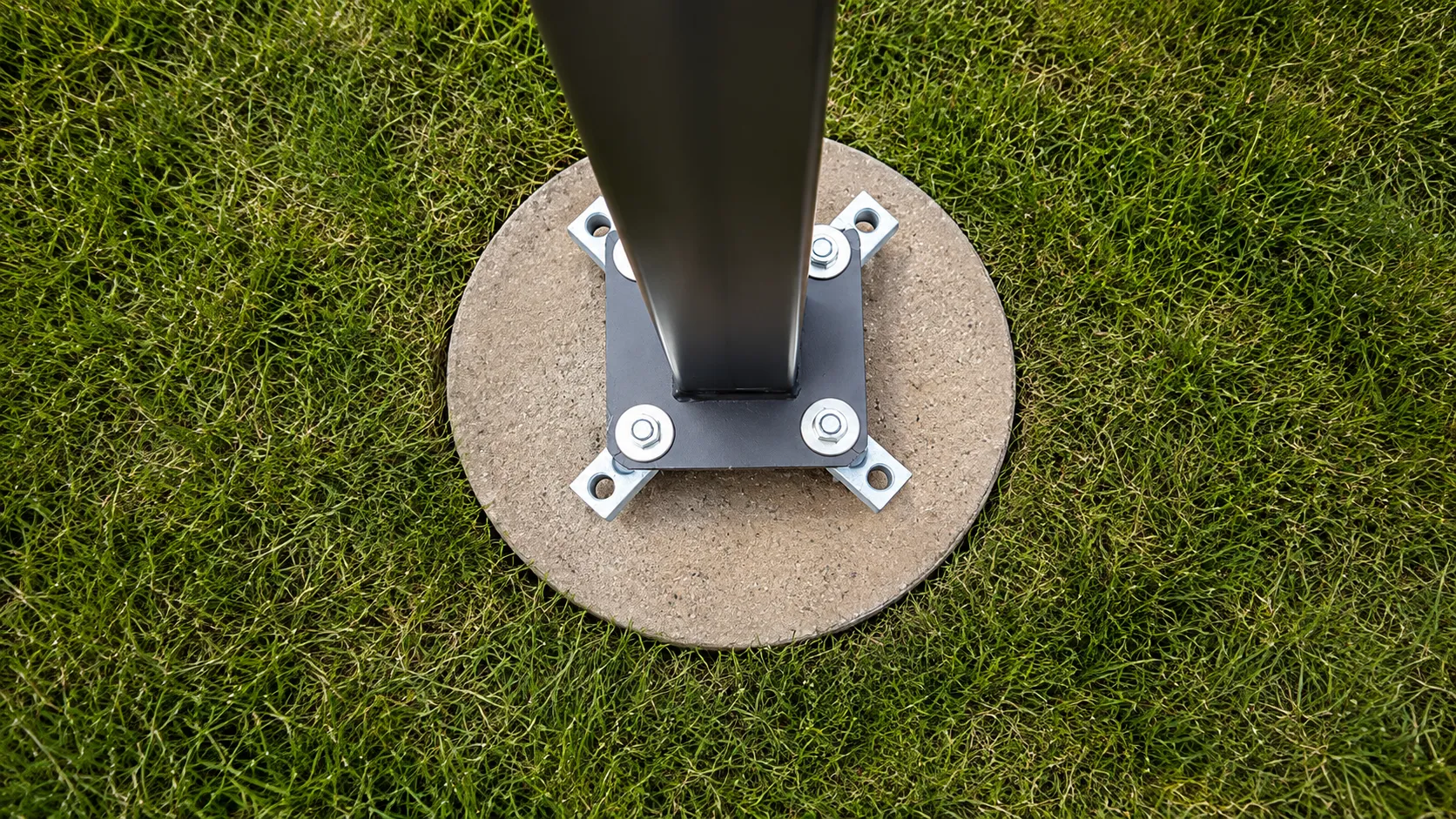
When an existing footing and a replacement pole have incompatible bolt patterns, an Anchor Bolt Adapter may allow the new light pole to be installed without replacing the existing concrete footing.
Check Every Light Pole Location
Another common mistake is measuring one existing pole and assuming every pole on the property is identical.
Properties are often developed, expanded, or renovated in phases. Light poles installed during different phases may have been supplied by different manufacturers or built to different specifications.
As a result, two poles that appear identical may not have the same anchor bolt pattern.
Measure every pole location before ordering replacement poles.
That simple step can prevent an expensive surprise when the new poles arrive at the job site.
Understanding Light Pole Anchor Bolt Terminology
Another source of confusion is terminology.
Manufacturers and contractors may use different terms when describing light pole anchor bolt measurements, including:
- Anchor bolt pattern
- Base pattern
- Bolt circle
- Bolt square
Although these terms are sometimes used interchangeably, they do not always describe the same measurement.
Anchor Bolt Pattern or Base Pattern
Anchor bolt pattern is a general term used to describe the arrangement and measurements of the anchor bolts in a concrete footing or the corresponding holes in a light pole base plate.
There is no single measurement automatically associated with the term.
When someone refers to the bolt pattern, they may be referring to the bolt circle or, in some cases, the bolt square.
Bolt Circle
The bolt circle is generally the preferred measurement for describing an anchor bolt pattern.
For a standard four-bolt square pattern, the bolt circle is measured diagonally from the center of one anchor bolt to the center of the opposite anchor bolt.
It is also the diameter of an imaginary circle passing through the center of all four anchor bolts.
Bolt Square
The bolt square is the measurement from one anchor bolt to the adjacent anchor bolt on a standard four-bolt square pattern.
In other words, it measures one side of the square rather than the diagonal.
Bolt square measurements are sometimes easier to obtain on an existing standing pole where measuring the complete bolt circle is difficult.
When using this method, measure all four sides of the anchor bolt pattern rather than relying on a single measurement.
Converting Bolt Square to Bolt Circle
For a standard four-bolt square pattern, the bolt square can be converted to a bolt circle using this formula:
Bolt Square ÷ 0.707 = Bolt Circle
Or:
BS ÷ 0.707 = BC
For example, if the bolt square measures 10 inches:
10 ÷ 0.707 = approximately 14.14 inches

If the four bolt-square measurements are not identical, calculate the bolt circle using both the highest and lowest measurements. This provides a range that can be considered when determining whether the replacement pole will fit.
For complete measurement instructions, see our guide to light pole bolt patterns, including bolt circle vs. bolt square.
Watch: How to Measure Light Pole Bolt Patterns
This video demonstrates how to measure a light pole anchor bolt pattern and explains the difference between bolt circle and bolt square measurements.
If the existing anchor bolts and new light pole do not align, Light Pole Systems offers both Anchor Bolt Adapters and Custom Adapter Plates for certain light pole replacement situations.
Anchor Bolt Template Problems
Anchor bolt templates can create another set of problems during new light pole installations.
The pole manufacturer may supply or specify an incorrect anchor bolt template. A contractor pouring the footing may also build or use the wrong template.
Problems can also occur when a template is too weak or is removed before the concrete has adequately cured, allowing the anchor bolts to move out of position.
Why the Template Matters
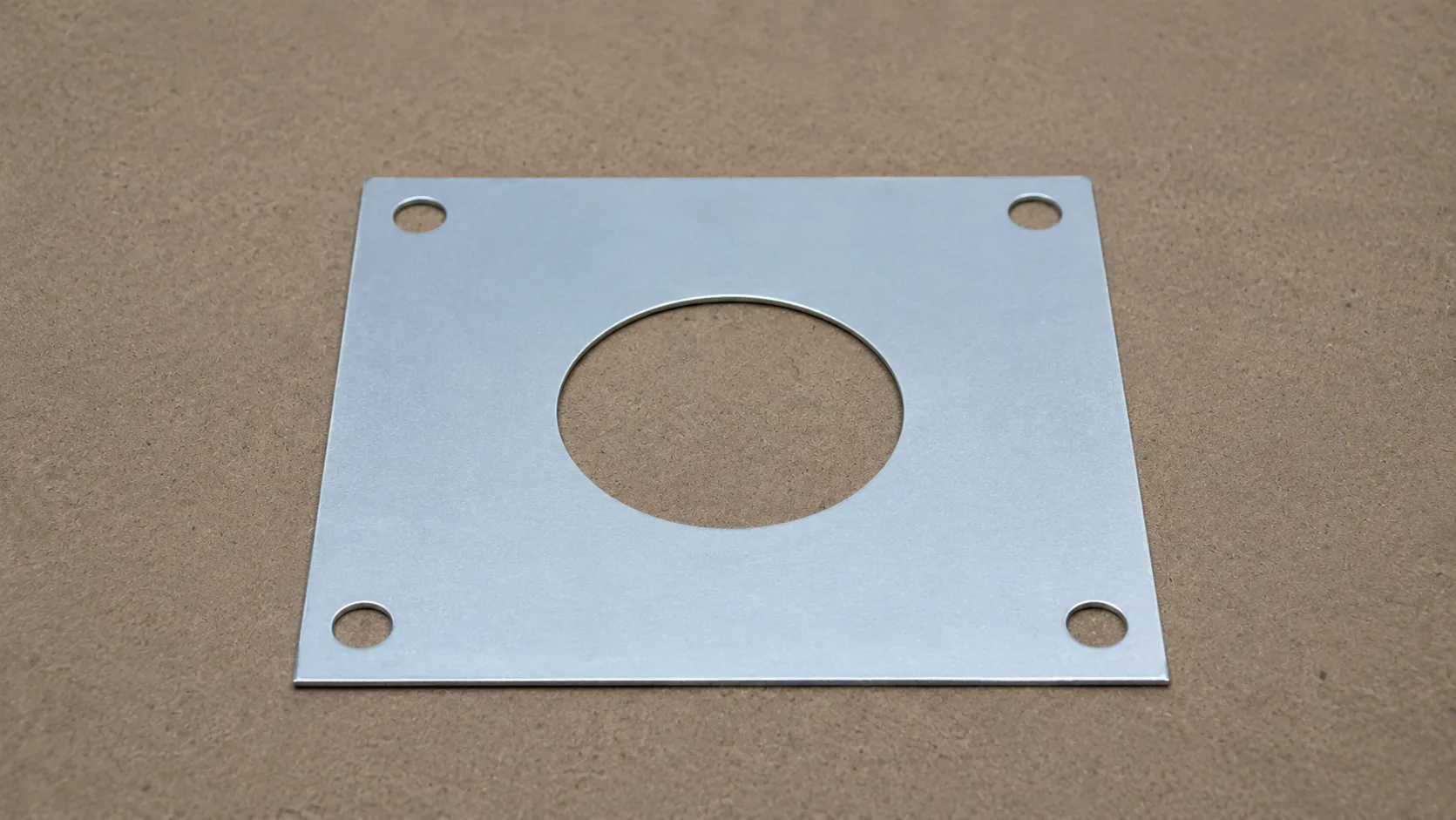
Pole manufacturers may provide a paper or thin metal template showing the required anchor bolt pattern.
A stronger template, commonly made from plywood, can then be fabricated to hold the anchor bolts in the correct position while the concrete footing is poured.
The template helps keep the anchor bolts:
- Properly spaced
- Square to one another
- Vertically aligned
- Positioned correctly while the concrete cures
When multiple footings are being poured simultaneously, each footing should have its own template rather than moving one template from footing to footing before the concrete has cured.
Accurate anchor bolt placement during construction can eliminate a considerable amount of trouble when the light poles arrive.
2. Light Poles Can Be Damaged During Shipping
Another common light pole problem happens before the pole ever reaches the job site.
Light poles are long, relatively unusual pieces of freight, and not every shipping company or forklift operator is experienced in handling them correctly.
Forklift Damage
One potential problem occurs when a forklift operator inserts a fork into the open end of a pole and attempts to lift or drag the pole from one end.

Improper handling can cause:
- Dents
- Bending
- Scratches
- Finish damage
- Damage to the end of the pole
Damage may not always be obvious until the pole is unloaded and inspected.
LTL Shipping Can Increase Handling
Less Than Truckload, or LTL, carriers are commonly used for smaller pole orders because dedicated or specialized truckload shipping may be considerably more expensive.
The downside is that LTL freight may be transferred between trucks and terminals several times before reaching its destination.
Every additional transfer creates another opportunity for improper handling or damage.
For this reason, light poles being shipped by LTL freight should be packaged appropriately for repeated handling.
For some projects, specialized truckload transportation may be a better option.
Inspect Light Poles When They Arrive
When receiving light poles, inspect the shipment for visible damage before installation.
Pay particular attention to:
- Pole ends
- Base plates
- Welds
- Hand holes
- Surface finish
- Dents or deformation along the shaft
Identifying shipping damage immediately makes it easier to document what happened and address the issue before installation begins.
If an existing pole shows rust, coating failure, or deterioration rather than shipping damage, see our guide to light pole corrosion.
3. Light Pole Lead Times Can Delay a Project
The third common problem is availability.
Not every light pole configuration is sitting on a warehouse shelf waiting to ship.
Stock Pole Selection Can Be Limited
Some manufacturers maintain inventory only for commonly requested pole sizes, configurations, and finishes.
If the required height, wall thickness, material, bolt pattern, finish, or other specification is not available from stock, the pole may need to be manufactured to order.
Custom Light Poles Require Additional Planning
Projects requiring unusual dimensions, configurations, finishes, or engineering specifications may require a custom-manufactured pole.
These orders generally require more planning than purchasing a standard stocked product.
If your project requires a specific pole configuration, review those requirements early rather than waiting until the existing pole has already been removed or the installation date is approaching.
Light Pole Systems also provides custom light poles for projects requiring specific sizes, shapes, materials, or configurations.
Preventing Common Light Pole Problems Starts With Planning
Most of these problems are easier to address before a light pole is ordered.
Before ordering replacement or new light poles:
- Measure the anchor bolt pattern at every pole location.
- Confirm whether measurements are based on bolt circle or bolt square.
- Verify the replacement pole’s base plate dimensions.
- Check anchor bolt templates before concrete is poured.
- Plan for proper packaging and transportation.
- Inspect poles when they arrive.
- Confirm availability and manufacturing requirements early in the project.
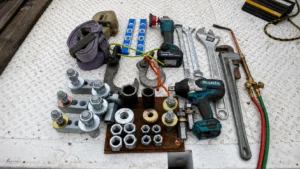
If the project involves removing and replacing an existing pole, review our guide to light pole replacement tools for equipment commonly used during the work.
A few measurements and checks at the beginning of the project can prevent much larger problems later.
If you have an unusual light pole problem or need help determining the right solution for an existing installation, contact the Light Pole Systems team.
We have spent decades working with light poles and light pole components, and unusual field conditions are exactly the kinds of problems we like solving.