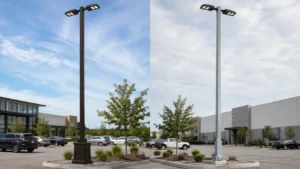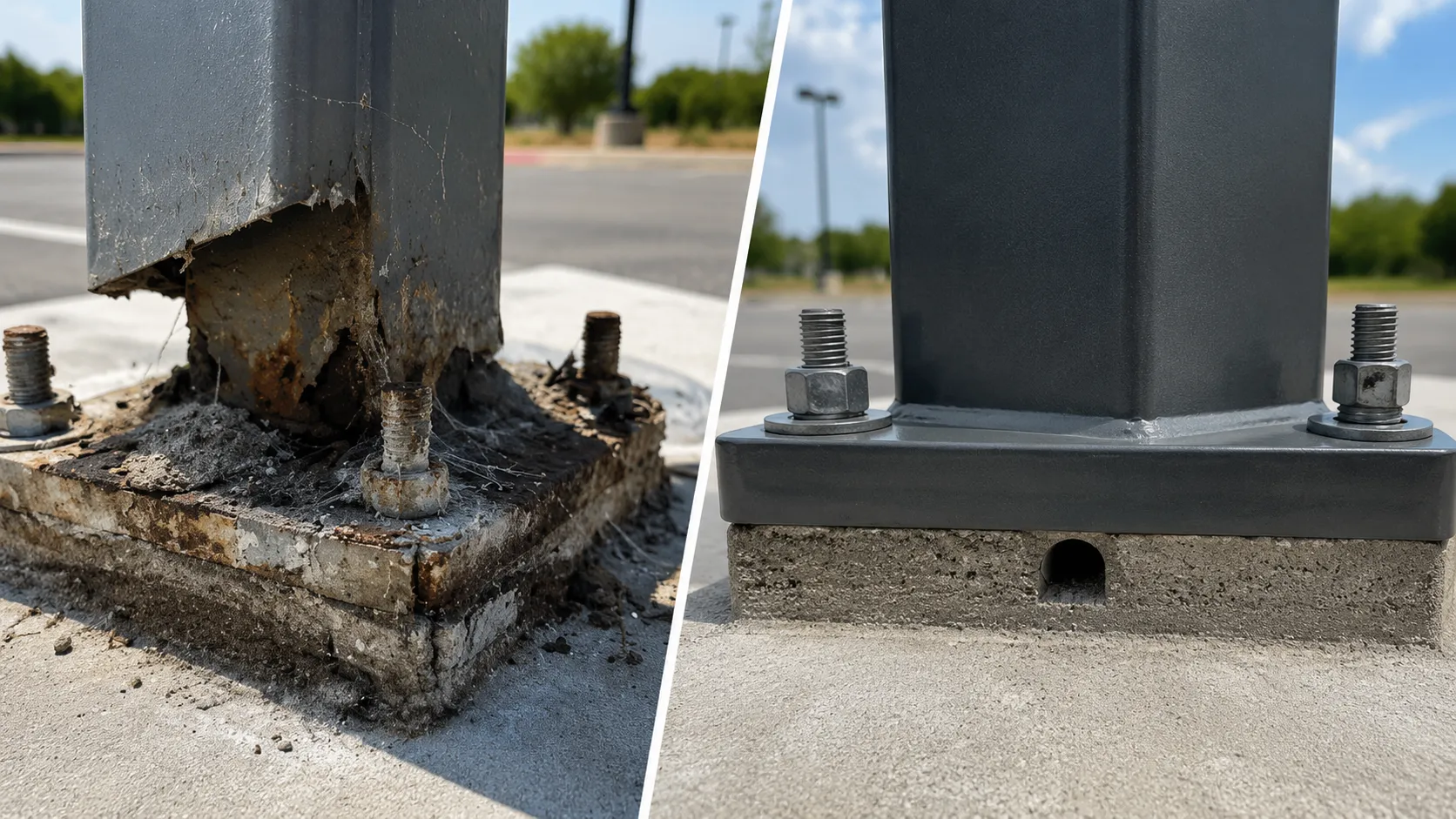
Although a light pole may appear sealed from the outside, moisture can still collect inside the pole from condensation, rainwater, irrigation, and normal exposure to outdoor conditions. If that moisture cannot drain properly, it can remain around the bottom of the pole, base plate, anchor bolts, and concrete footing.
Over time, trapped moisture can contribute to corrosion and deterioration around one of the most important areas of the light pole: the base.
Proper light pole drainage is therefore an important consideration when installing, maintaining, or replacing anchor-base light poles.
Why Does Water Collect Inside a Light Pole?
Outdoor light poles are continuously exposed to changing temperatures and weather conditions.
Even when a pole appears well sealed, condensation can develop inside the pole as temperatures change. Water may also enter through openings around wiring, hand holes, pole-top components, damaged seals, or other penetrations.
The goal is not simply to keep every drop of moisture out of the pole. The installation should also provide a way for accumulated water or condensation to drain.
This is especially important with steel poles because prolonged exposure to moisture can contribute to corrosion.
For additional information about pole construction, materials, and common causes of damage, read our guide to Light Poles: More Than Just Holding a Light.
What Is Dry Pack or Non-Shrink Grout Under a Light Pole?
Many anchor-base light poles are mounted to anchor bolts embedded in a concrete footing.
Many older light pole specifications called for dry pack beneath the base plate to help prevent the leveling nuts from loosening. For standard light poles, the dry pack is not structurally required to support the pole load. However, when dry pack is present, it should not prevent water from draining from the interior of the pole.
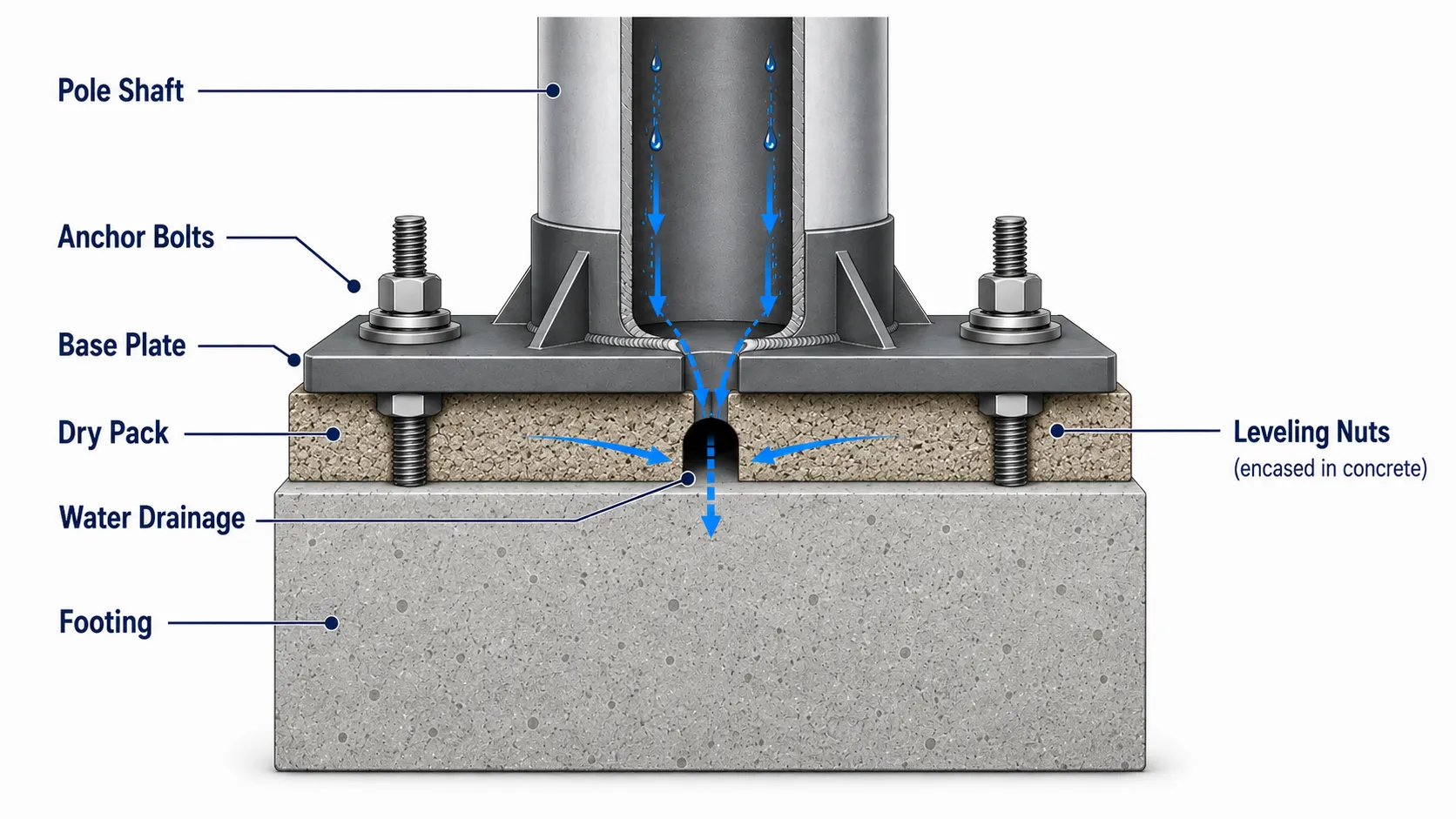
Grout itself is not necessarily the problem.
The problem occurs when grout or other material beneath the base plate prevents water from draining out of the pole.
For more information about proper clearance around the base plate and foundation, see why light poles shouldn’t be set directly on concrete.
Manufacturer guidance commonly requires proper drainage to be maintained when grout is used between the pole base plate and foundation.
Some pole manufacturer specifications similarly call for a channel through the grout so water can drain from the interior of the pole.
Why Proper Light Pole Drainage Matters
Without an adequate drainage path, water can remain trapped near the bottom of the pole.
This area is particularly important because it includes several components associated with the pole’s connection to the foundation:
- The bottom portion of the pole shaft
- The welded connection between the pole and base plate
- The base plate
- Anchor bolts
- Nuts and washers
- The top of the concrete footing
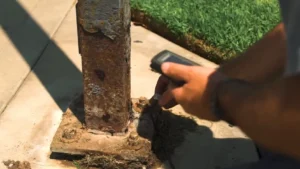
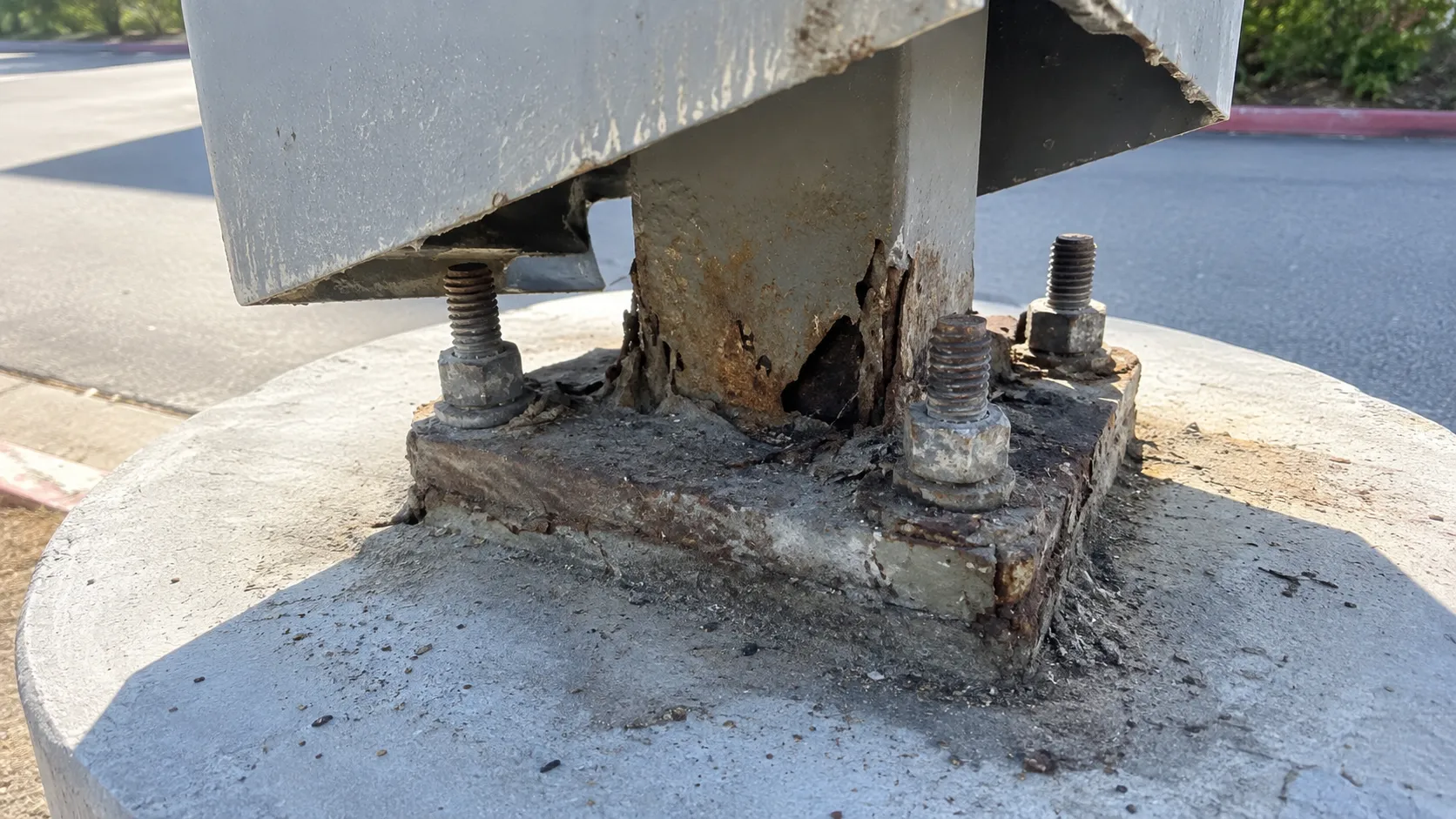
Moisture that remains in this area can contribute to corrosion, particularly when protective coatings have already been damaged or deteriorated.
The corrosion may also be difficult to identify if part of the affected area is hidden beneath the pole, base plate, grout, or base cover.
What Proper Light Pole Drainage Looks Like
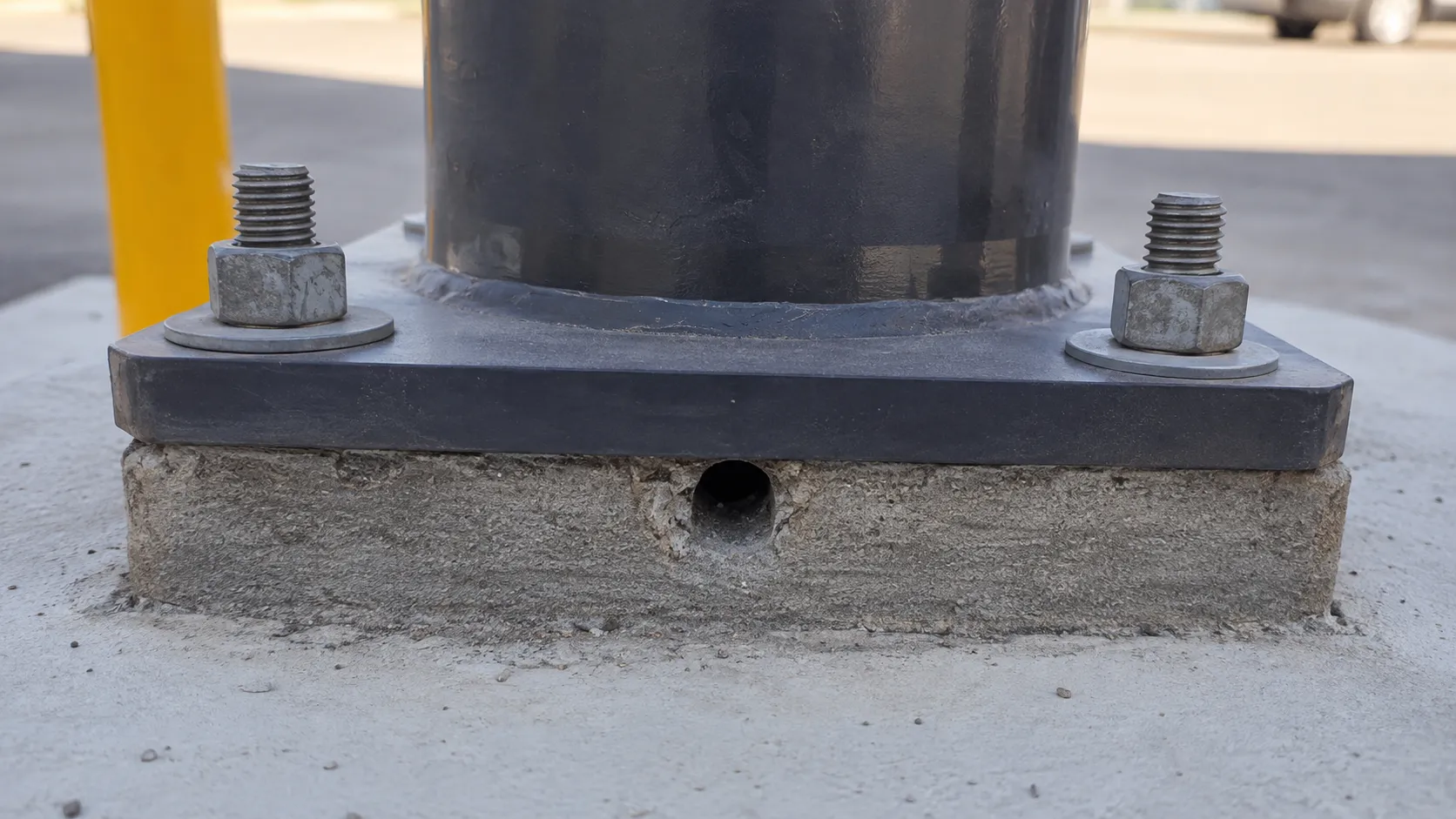
When grout is installed beneath a light pole base plate, there should be an appropriate path that allows water from inside the pole to escape.
Depending on the pole design and installation requirements, this may be accomplished through an opening or drainage channel through the grout.
The exact configuration should follow the pole manufacturer’s installation requirements and the project specifications.
The important principle is simple:
Water entering or condensing inside the pole needs somewhere to go.
Blocking the bottom of the pole completely can allow moisture to remain trapped inside.
Signs a Light Pole May Have a Drainage Problem
Drainage conditions are worth paying attention to when working around existing light poles, particularly older steel poles.
Some conditions that may justify further evaluation include:
- No visible drainage path beneath the base plate
- Grout or concrete completely surrounding the bottom of the pole
- Standing water around the pole base
- Rust staining around the pole or base plate
- Flaking, bubbling, or deteriorated paint
- Visible corrosion near the bottom of the pole
- Cracked or deteriorated grout
- Corrosion around anchor bolts, nuts, or washers
- Significant deterioration hidden underneath a base cover
Visible surface rust does not automatically indicate that a pole has structurally failed, but significant corrosion or deterioration should not simply be covered and ignored.
For more detail on warning signs and failure risks, see our guide to light pole corrosion.
If structural damage is suspected, the condition should be evaluated by an appropriately qualified professional.
What Should You Do With Existing Dry Pack?
If an existing light pole has dry pack or grout underneath the base plate, determine whether water can properly drain from the interior of the pole.
Light Pole Systems’ own Cone Base Cover Installation Guide instructs installers to make sure water can drain from inside the pole and to check beneath the base plate for dry-packed concrete.
For an existing installation, the appropriate corrective action will depend on the condition of the pole, dry pack, footing, anchor bolts, and surrounding components.
If dry pack is preventing water from draining, a drainage hole can be added through the dry pack using a concrete drill. Use caution when drilling to avoid electrical conduit within the footing or pole base area.
Never simply drill a drainage hole through the light pole shaft. The drainage path should be created through the dry pack so accumulated water can escape from beneath the pole base.
What About Drainage When Replacing a Light Pole?
Before installing a new light pole on an existing footing with dry pack around the anchor bolts, chip away the dry pack entirely whenever possible to provide access to the leveling nuts. At a minimum, remove enough dry pack to establish a clear drainage path so water can escape from inside the pole.
Before installing the replacement pole, review the condition of:
- The concrete footing
- Existing anchor bolts
- Nuts and washers
- The area around the base plate
- Existing grout or dry pack
- Any visible corrosion or deterioration
The replacement pole should then be installed according to the pole manufacturer’s requirements and applicable project specifications, including any requirements for grout, leveling, anchor-bolt installation, and drainage.
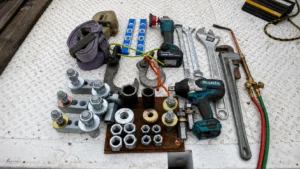
If pole replacement is required, review our guide to light pole replacement tools for equipment commonly used during removal and installation.
If the original anchor bolts are badly rusted, damaged, or unusable but the existing footing remains suitable for reuse, see our guide on How to Install Anchor Bolts in an Existing Concrete Footing.
Anchor Bolt Problems Can Complicate Pole Replacement
Drainage is only one issue that may be discovered when replacing an existing pole.
Contractors may also find that the existing anchor bolts:
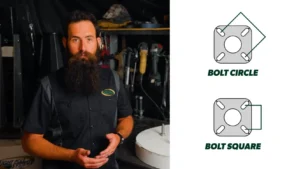
- Do not match the new pole’s bolt pattern
- Are too short
- Have damaged or corroded exposed threads
- Cannot be reused
- Are positioned incorrectly for the replacement pole
Before removing or modifying otherwise usable anchor bolts, determine what is actually preventing the replacement pole from fitting.
If the existing anchor bolts remain structurally usable but the bolt pattern does not match the replacement pole, an Anchor Bolt Adapter may provide a solution without replacing the footing.
If the existing anchor bolts are usable but do not provide enough exposed thread, a Thread Extender may also be appropriate for certain applications.
What If Corrosion Has Already Damaged the Pole Base?
Sometimes a drainage problem is discovered only after corrosion has already affected the lower portion of a steel pole.
Depending on the pole, footing, anchor bolts, extent of corrosion, and project requirements, complete pole replacement may not always be the only option.
Light Pole Systems manufactures a Pole Repair Kit designed for specific applications involving corrosion or damage at the lower section of a light pole.
The proper solution depends on the actual condition of the pole and foundation. Significant structural deterioration should always be evaluated before deciding whether the pole can be repaired or needs to be replaced.
Light Pole Drainage Is One Part of Preventing Premature Corrosion
There is no single cause of light pole corrosion.
Pole material, protective coating, environmental exposure, irrigation, water, installation conditions, physical damage, and ongoing maintenance can all affect the condition of a pole over time.
Drainage is important because even a well-finished pole can be exposed to moisture internally through condensation or external conditions.
Providing accumulated water with an appropriate path out of the pole helps eliminate one condition that can contribute to corrosion at the base.
The bottom of a light pole is also easy to overlook, particularly when decorative base covers conceal the anchor bolts and base plate. When working on an existing pole, take the opportunity to look at what is happening underneath instead of simply installing another cover over the problem.
Frequently Asked Questions About Light Pole Drainage
Can water collect inside a light pole?
Yes. Moisture can enter or develop inside outdoor light poles through condensation, weather exposure, openings, wiring penetrations, or other environmental conditions. This is why providing a drainage path at the bottom of the pole is important.
Should grout under a light pole have drainage?
When grout is used beneath a pole base plate, drainage should be maintained according to the pole manufacturer’s requirements and project specifications. Some pole manufacturers specifically require a drainage channel through the grout.
Does grout under a light pole cause corrosion?
Grout itself should not automatically be considered the cause of corrosion. The concern is an installation where grout or other material traps moisture and prevents water from draining away from the interior and base of the pole.
Should dry pack be removed when replacing a light pole?
When replacing a light pole on an existing footing, dry pack around the anchor bolts should be chipped away to provide access to the leveling nuts. Ideally, the existing dry pack should be removed entirely. At a minimum, remove enough material to provide a clear drainage path for water from inside the pole.
What should I do if the base of a light pole is badly rusted?
Significant corrosion should be evaluated before the pole is returned to service or simply covered. Depending on the condition, the appropriate solution may involve repair or pole replacement. Light Pole Systems offers a Pole Repair Kit for certain light pole base corrosion applications.
Need Help Solving a Light Pole Problem?
Light pole replacement projects can uncover more than one problem at the foundation. Drainage issues, corrosion, damaged anchor bolts, incorrect bolt patterns, and insufficient anchor-bolt projection can all complicate what initially looked like a straightforward pole replacement.
Light Pole Systems develops products specifically for these types of light pole installation and repair challenges.
Explore our Anchor Bolt Adapter, Thread Extender, and Pole Repair Kit, or contact Light Pole Systems for help determining the appropriate product for your application.