How to Remove Rusted Anchor Nuts From Light Pole Anchor Bolts
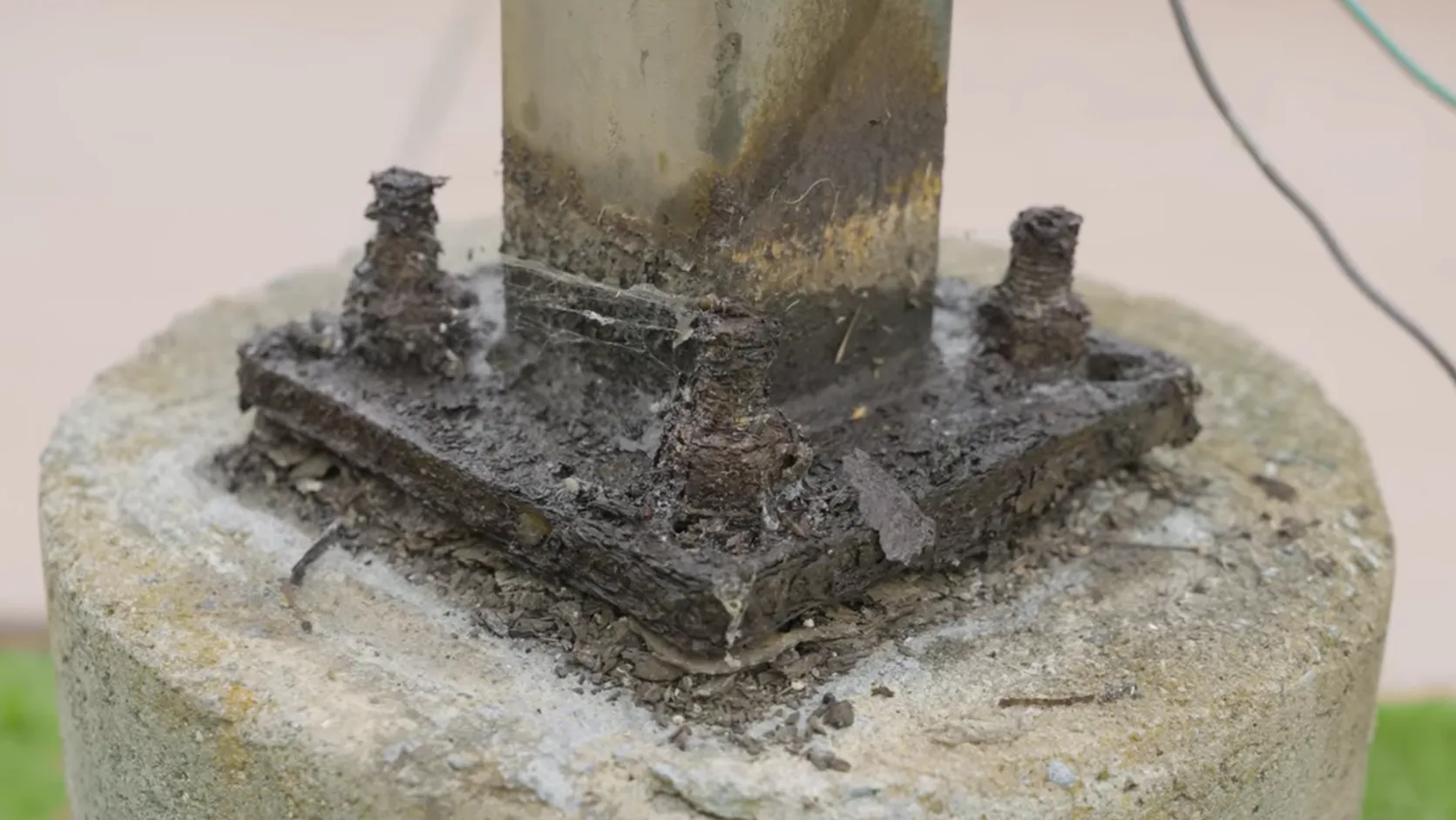
Anchor nuts on outdoor light poles are constantly exposed to moisture, weather, and changing environmental conditions. Over time, severe corrosion can make an anchor nut difficult or even impossible to remove with a standard wrench or socket.
When rust becomes severe, the nut can become brittle and flaky. The flats of the nut may also deteriorate enough that a wrench or socket begins to slip, strip, or round off the hardware instead of loosening it.
Fortunately, there are several methods that may help remove a severely rusted anchor nut while preserving the existing anchor bolt.
Watch: How to Remove Rusted Anchor Nuts
In this Light Pole Systems Tech Tip, we demonstrate several methods for removing severely rusted anchor nuts from an existing light pole footing, including what to do when a standard wrench or socket can no longer get a secure grip.
Safety Note: This article and video provide a general overview of techniques used to remove rusted light pole anchor nuts. Supporting a light pole, working around potentially compromised anchor bolts, and using an oxy-acetylene torch involve serious hazards. Work should be performed by qualified personnel using appropriate site-specific safety procedures. For additional lifting considerations, review our guide to light pole rigging safety.
Why Light Pole Anchor Nuts Become Difficult to Remove
Surface rust does not always prevent an anchor nut from being removed. The problem becomes more serious when corrosion progresses to the point where the nut and exposed anchor bolt threads begin deteriorating.
Severely rusted anchor nuts can become:
- Brittle
- Flaky
- Rounded
- Difficult for a socket to grip
- Seized to the anchor bolt threads
Corrosion on the exposed threads above the nut can create another problem. Even if the nut initially breaks loose, heavily rusted threads may prevent it from unthreading the rest of the way.
The goal is therefore not simply to force the nut off. The condition of the anchor bolt also needs to be monitored throughout the process.
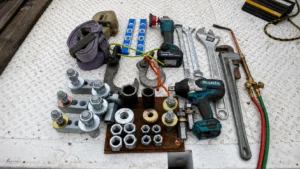
Tools Referenced in the Rusted Anchor Nut Removal Process
Depending on the severity of the corrosion, the following tools may be used:
- Wire wheel
- Penetrating oil
- End wrench
- Socket
- Pipe wrench
- Hammer
- Six-point socket
- Breaker bar
- Impact gun
- Oxy-acetylene torch with a rosebud tip
- Metal plate used as a heat shield
Not every rusted nut will require every tool. Start with the least aggressive removal method and move to the additional methods when necessary.
How to Remove a Rusted Anchor Nut
1. Support the Light Pole Before Loosening the Anchor Nuts
Before removing anchor nuts, make sure the light pole is properly supported.
We recommend securing the pole to a crane to support the weight of the light pole and help prevent it from falling over.
If the pole is not supported by a crane, only loosen one anchor nut at a time. Tighten each nut before moving on to the next anchor nut.
Supporting the pole becomes especially important when working with older hardware where the condition of the anchor bolts may not yet be known.
2. Clean Rust and Debris From the Nut and Threads
Before trying to loosen the nut, use a wire wheel to clean rust and debris from the exposed anchor bolt threads and anchor nut.
Removing loose corrosion allows you to better see the condition of the hardware and may make it easier for the nut to move across the exposed threads.
This is also a useful time to look for obvious deterioration or damage before applying additional force.
3. Apply Penetrating Oil
Apply penetrating oil to the anchor nut and exposed threads.
In many situations, penetrating oil may be enough to help break the nut loose.
Allow as much time as practical for the oil to penetrate the rusted connection. The more time the penetrating oil has to work, the better.
4. Remove Excess Threads Above the Anchor Nut When Needed
If a significant amount of anchor bolt thread extends above the nut, cutting off the unnecessary exposed portion can reduce the amount of rusted thread the nut must travel across.
This can help for two reasons:
- The nut has less corroded thread to travel over before it can be removed.
- Removing excess thread may provide enough clearance for a socket to fit completely over the anchor nut.
The threads above an existing nut are often among the most exposed portions of the anchor bolt and may have significant corrosion.
5. Try an End Wrench or Socket
After cleaning the hardware and applying penetrating oil, first try removing the nut with an end wrench or socket.
A socket is generally the preferred option when one can fit securely over the nut.
As you begin loosening the nut, watch the anchor bolt carefully.
If the anchor bolt begins rotating with the anchor nut, stop.
Continuing to rotate the anchor bolt can create a risk of breaking the bolt. At that point, we recommend moving to the heat-assisted method rather than continuing to force the nut.
If you need to confirm the existing hardware size before replacing a nut or washer, see our guide on how to measure light pole anchor bolt size.
6. Use a Pipe Wrench if the Nut Is Too Rounded for a Socket
Severe corrosion can wear away the flats of the anchor nut until a conventional wrench or socket can no longer get a secure grip.
When the rusted nut is too rounded for a socket or end wrench, a pipe wrench may provide enough grip to break the nut loose.
Again, watch the anchor bolt while applying force.
If the anchor bolt begins twisting with the nut, stop and move to the heat-assisted method rather than continuing to turn the bolt.
Using Heat to Remove a Severely Rusted Anchor Nut
When other methods are unsuccessful, use an oxy-acetylene torch to heat the rusted anchor nut.
The torch serves two purposes:
- It can help break the rusted connection between the nut and anchor bolt.
- Heating the nut makes it softer, which can help when hammering a six-point socket onto badly deteriorated hardware.
Light Pole Systems recommends using a rosebud tip on an oxy-acetylene torch and heating all sides of the anchor nut until the nut is near red hot.
Protect the Pole and Wiring From Heat
Before heating the nut, place a metal plate between the light pole and anchor nut to serve as a heat shield.
This helps protect the pole and the electrical wiring inside it from the intense heat generated by the torch.
Also inspect the surrounding work area and make sure nearby materials will not catch fire.
Torch work should only be performed by personnel qualified to use this equipment and following the appropriate job-site fire and safety procedures.
Hammer a Six-Point Socket Onto the Heated Nut
Once the nut has been heated, hammer a properly sized six-point socket onto the anchor nut. For severely rusted nuts, a socket one size smaller can be used to help re-form the nut and provide a better grip.
A six-point socket provides better contact with the nut than a 12-point socket, which is particularly useful when the original flats have deteriorated from corrosion.
Use a breaker bar to break the nut loose.
Once the nut is turning freely, an impact gun can be used to help spin the nut off the remaining threads.
If the socket still cannot get sufficient grip after the nut is heated, a pipe wrench can also be used to break the nut loose and remove it.
Inspect the Anchor Bolt After Removing the Rusted Nut
Removing the rusted anchor nut is only part of the job.
Once the nut has been removed, take the opportunity to inspect the exposed anchor bolt.
Pay particular attention to corrosion that appears:
- Deeper than the thickness of the anchor bolt threads
- To significantly reduce the diameter of the bolt
- To create an hourglass-shaped appearance
These conditions may indicate that the integrity of the anchor bolt has been compromised and needs to be addressed before the light pole is returned to service.
Do not assume an anchor bolt is structurally sound simply because the rusted nut was successfully removed.
Clean the Threads and Install New Hardware
If the anchor bolt remains suitable for use, clean the remaining threads as needed.
Then install a new washer and anchor nut.
Repeat the removal and replacement process for the remaining anchor nuts while continuing to support the pole with the crane. When working without crane support, loosen only one anchor nut at a time and tighten it before moving on to the next anchor nut.
If you need to access or work with hardware located underneath the pole base plate, our guide to light pole leveling nuts explains how those nuts are positioned and accessed.
What if the Anchor Bolt Is Rusted or Damaged?
A rusted anchor nut may reveal a larger anchor bolt problem once the hardware has been removed.
If corrosion has damaged the exposed threads, additional cleaning or repair may be necessary.
Watch our related video:
In some situations, an existing anchor bolt may remain structurally sound but no longer have enough usable exposed thread for the new pole hardware. Light Pole Systems manufactures Thread Extenders for light poles for applications where the existing anchor bolts are structurally sound but additional usable bolt length is required.
A Thread Extender should not be treated as a solution for an anchor bolt whose structural integrity has been compromised by severe corrosion.
If the existing anchor bolt cannot be reused and the project requires new anchors, see our guide on how to install anchor bolts in an existing concrete footing.
Frequently Asked Questions
Can penetrating oil remove a rusted anchor nut?
Penetrating oil can often help loosen a rusted anchor nut. Clean rust and debris from the nut and threads first, apply penetrating oil, and allow it time to work before attempting removal.
What should I do if the anchor bolt turns with the nut?
Stop applying rotational force. Continuing when the anchor bolt rotates with the nut creates a risk of breaking the anchor bolt. We recommend moving to the heat-assisted removal method instead.
Why cut off excess threads above a rusted anchor nut?
Corroded threads above the nut can make removal more difficult even after the nut has broken loose. Removing unnecessary excess thread reduces the distance the nut must travel and may also allow a socket to fit properly over the nut.
How do I know if a rusted anchor bolt may be compromised?
Inspect the anchor bolt after removing the nut. Corrosion deeper than the thickness of the threads or an anchor bolt that has developed an hourglass-shaped appearance may indicate compromised integrity that needs to be addressed.
Can a Thread Extender repair every rusted anchor bolt?
No. A Light Pole Systems Thread Extender is intended for an existing anchor bolt that remains structurally sound and has enough usable thread for proper engagement. Severely deteriorated or structurally compromised anchor bolts require a different solution.
More Light Pole Anchor Bolt Resources
Anchor bolts are one of the most important connections between a light pole and its concrete footing. Before replacing a pole or ordering new hardware, verify both the size and condition of the existing bolts.
Additional Light Pole Systems resources include:
- How to Measure Light Pole Anchor Bolt Size
- Light Pole Leveling Nuts: How to Access Them Under the Base Plate
- Light Pole Rigging Safety: What Contractors Should Know
- Thread Extenders for Light Poles
- How to Clean and Repair Rusted Anchor Bolts
- How to Measure Light Pole Bolt Patterns: Bolt Circle vs. Bolt Square
Light Pole Systems specializes in practical solutions for light pole anchor bolt, footing, base plate, and replacement-pole problems.
We pride ourselves on providing excellent customer service and look forward to helping you with any of your light pole needs.
Get a Quote