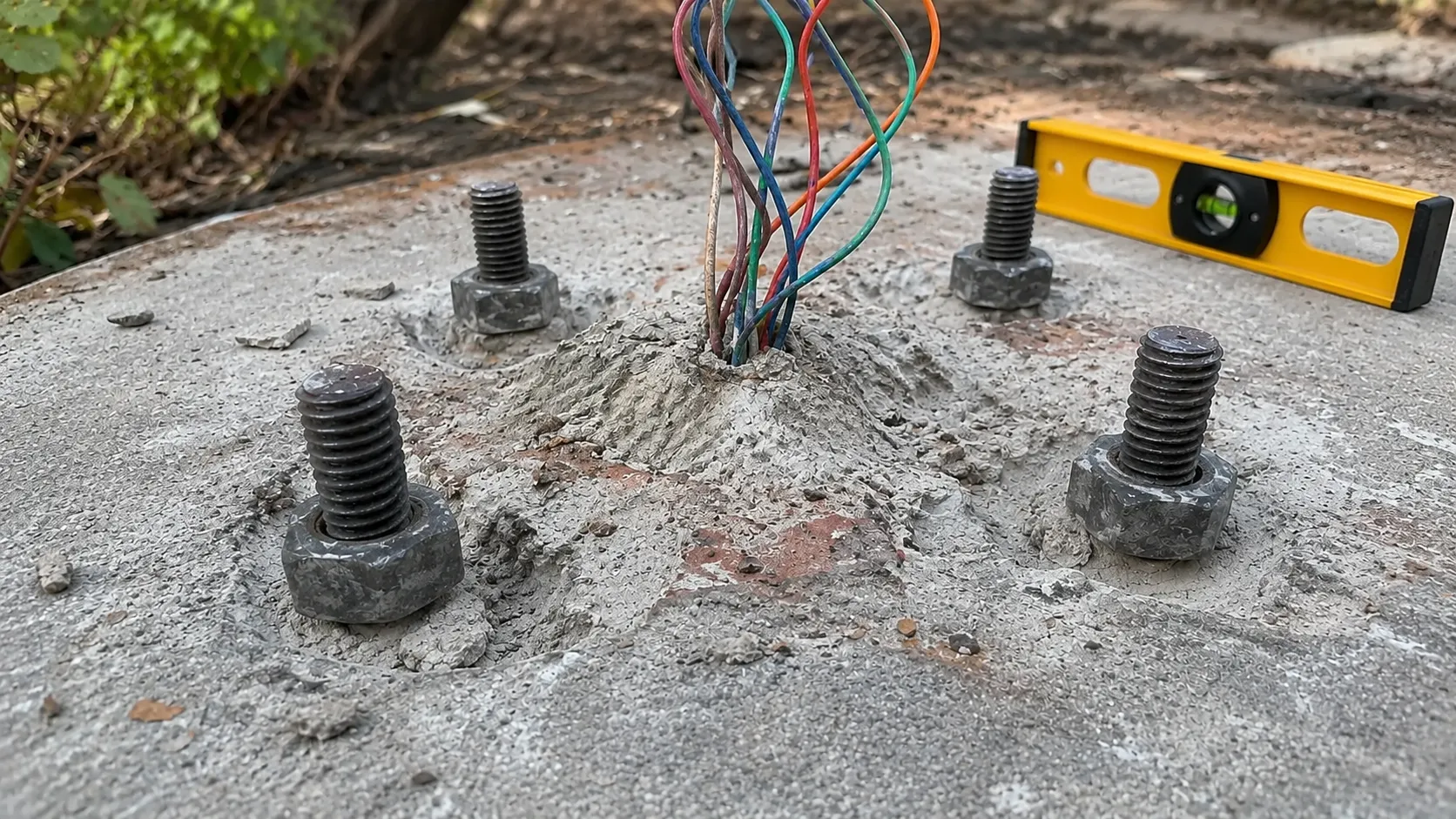
When replacing or working around an existing light pole, the leveling nuts underneath the base plate may not always be immediately visible. In some installations, concrete, dry pack, grout, debris, or years of accumulated material can make it appear as though the pole was installed without leveling nuts at all.
Before assuming the leveling hardware is missing, take a closer look at the anchor bolts and the area immediately below the base plate.
In many light pole installations, leveling nuts and washers are positioned on the anchor bolts below the base plate. These components help establish the position and elevation of the pole base and provide access for leveling during installation or replacement.
If the leveling nuts have been covered, the first challenge is simply finding them.
What Are Light Pole Leveling Nuts?
A typical anchor-bolt-mounted light pole uses several components at the foundation:
- Concrete footing
- Anchor bolts
- Lower leveling nuts
- Washers
- Light pole base plate
- Upper washers and nuts
The anchor bolts extend upward from the concrete footing and pass through holes in the pole’s base plate.
On installations that use leveling nuts, the lower nuts and washers sit beneath the base plate. Their position helps establish the elevation of the base plate and provides adjustment points for leveling the pole.
The upper nuts and washers secure the base plate to the anchor bolts.
Because much of this hardware is located close to the concrete footing, it can become concealed over time.
Why Do Leveling Nuts Sometimes Appear to Be Missing?
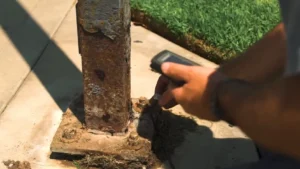
When an existing light pole is removed, contractors may occasionally find what looks like an anchor bolt coming directly out of the concrete with no visible leveling nut underneath.
That does not necessarily mean the hardware is absent.
Material may have been placed around the anchor bolts and underneath or around the base plate during the original installation. Depending on the installation, this may include dry pack or other material that can conceal the leveling nuts and washers.
Dirt, corrosion products, coatings, previous repairs, and years of accumulated debris can make the hardware even harder to identify.
This is why it is important to inspect the area around each anchor bolt before determining how an existing footing was constructed.
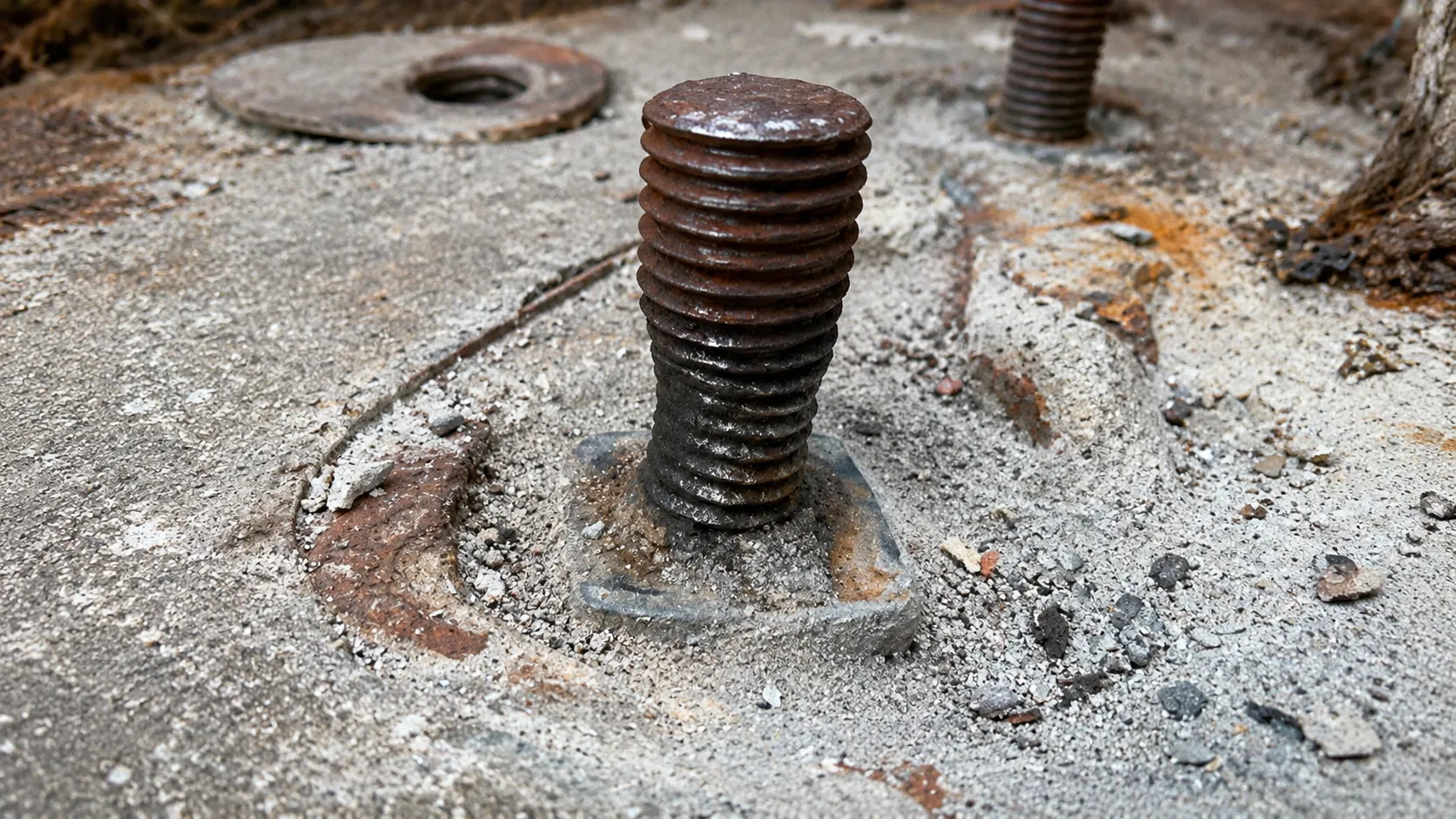
How to Access Leveling Nuts Under a Light Pole Base Plate
If a replacement pole is being installed and the existing leveling nuts are not visible, inspect the material surrounding the anchor bolts.
Where material around the bolt has been confirmed to be nonstructural dry pack or similar material, it may be possible to carefully remove enough of it to expose the existing nut and washer.
Do not assume that all concrete around an anchor bolt is decorative or removable. The structural footing itself should not be chipped or modified without determining how the foundation and anchor bolts were designed.
Once the appropriate surrounding material is removed, the leveling nut and washer may become visible.
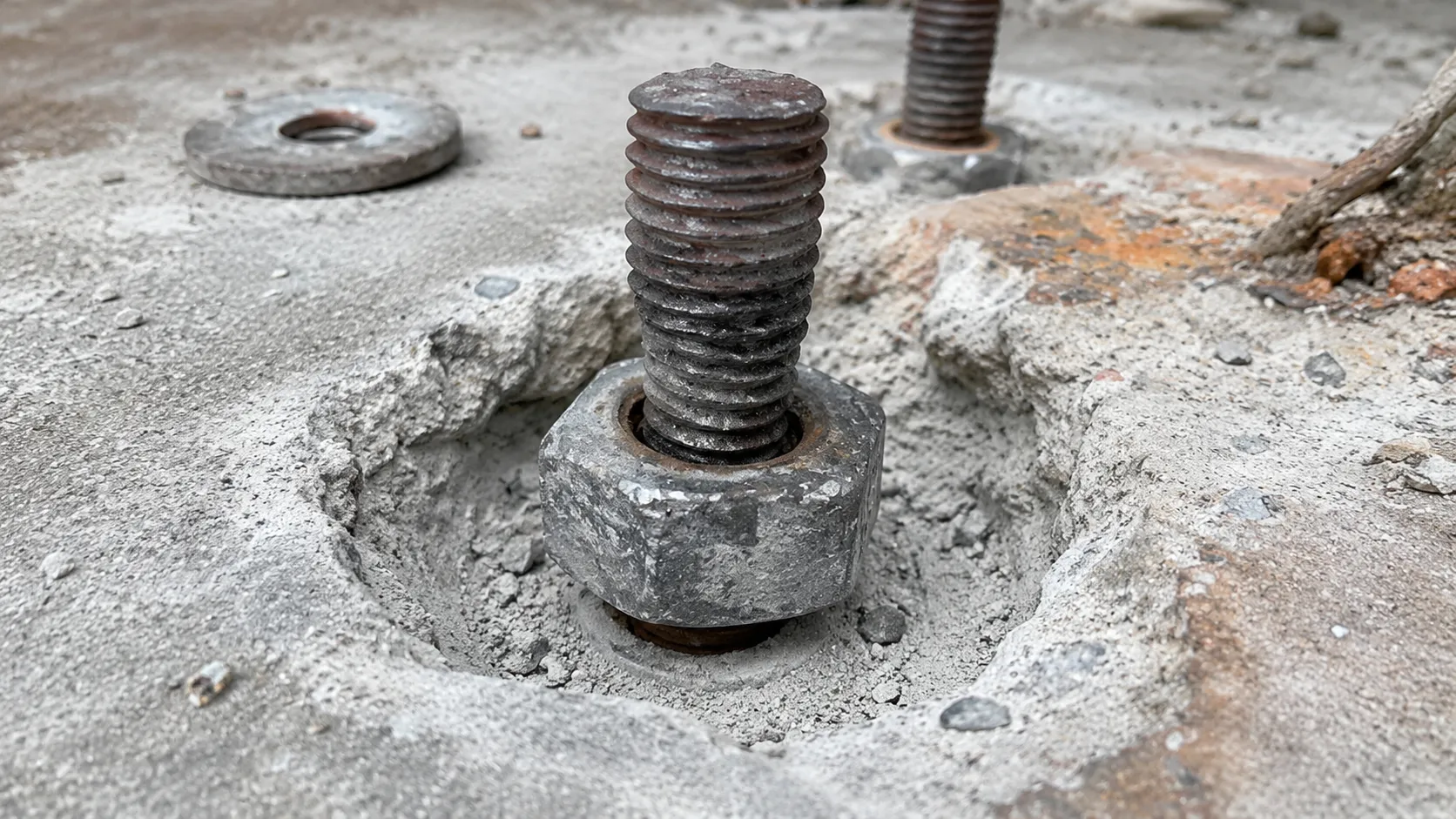
The process can then be repeated at the remaining anchor bolts as needed so the condition and position of the hardware can be evaluated.
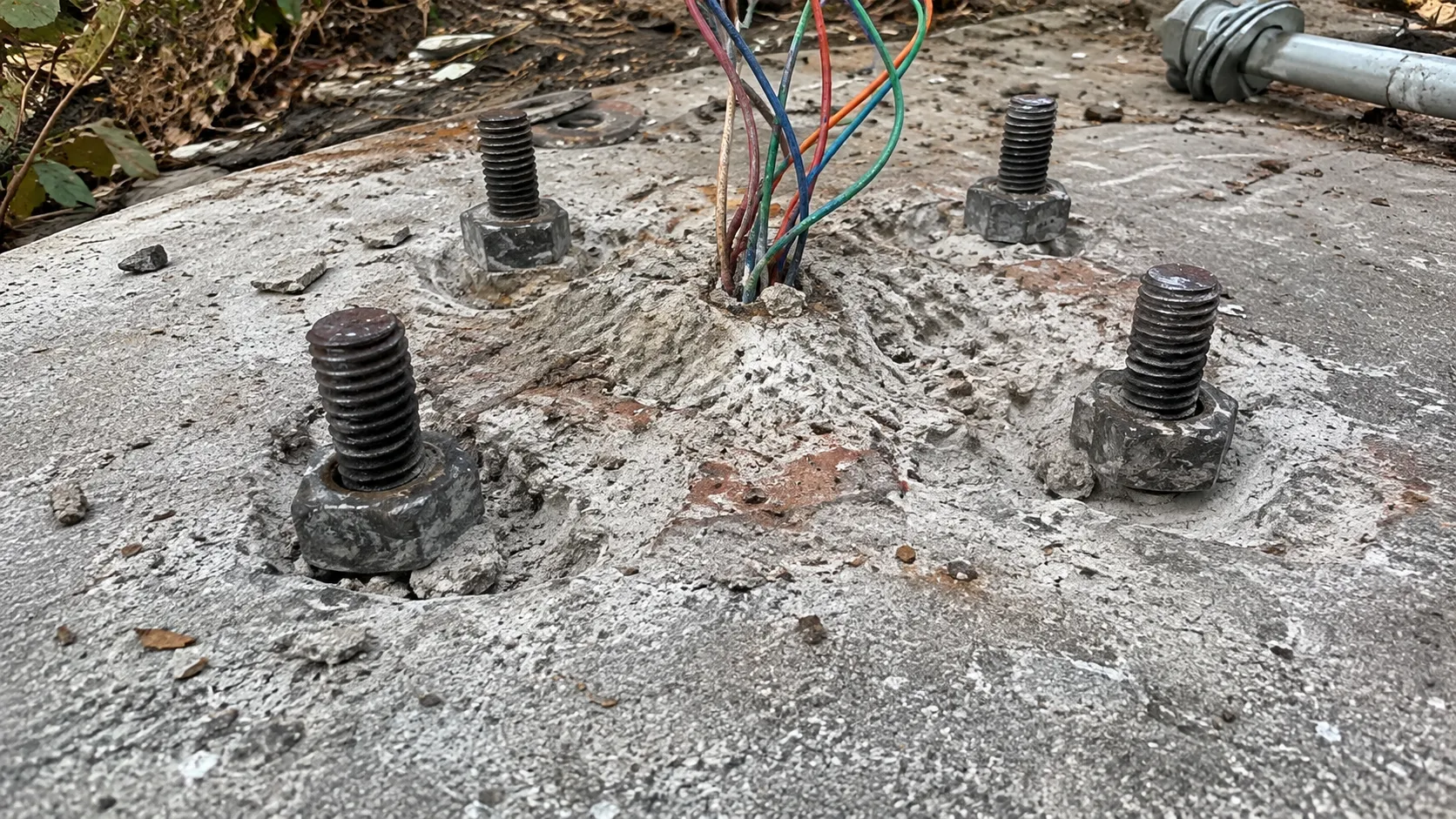
Multiple leveling points exposed around an existing light pole footing.
Check the Condition of the Anchor Bolts While They Are Exposed
Accessing the leveling nuts also provides an opportunity to examine the visible portions of the existing anchor bolts and hardware.
Look for conditions such as:
- Significant corrosion
- Damaged or missing threads
- Bent anchor bolts
- Damaged nuts or washers
- Insufficient exposed thread
- Cracking or deterioration around the footing
- Uneven anchor bolt projection
- Hardware that does not match the replacement pole base
If corrosion or damaged hardware makes the existing nuts difficult to remove, see our guide to removing rusted anchor nuts from light pole anchor bolts.
Watch: Inspecting Existing Light Pole Anchor Bolts
Finding one of these conditions does not automatically tell you whether an anchor bolt can be reused. Existing anchor bolts and foundations should be evaluated according to the project requirements and the condition of the installation.
However, identifying a problem before setting the replacement pole can prevent a much larger problem after the pole arrives at the footing.
Using the Leveling Nuts to Position the Pole
Once the leveling hardware is accessible and has been determined suitable for reuse, the lower nuts provide adjustment points beneath the pole base.
The elevation of the leveling nuts should be established according to the applicable pole, foundation, and engineering requirements.
A level can be used during the process to help verify the relationship between the support points before and during installation.
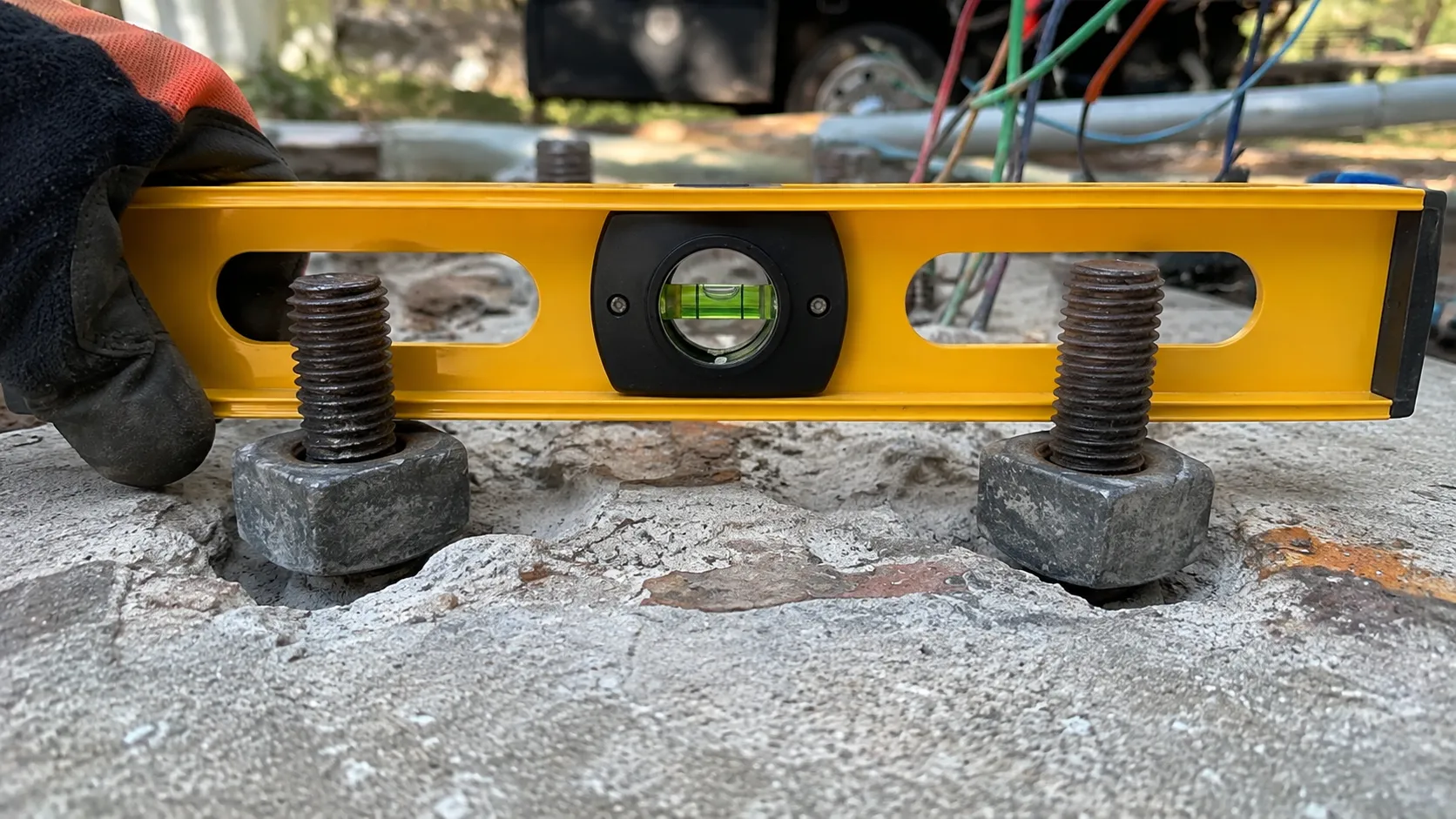
Final pole alignment, nut tightening, hardware configuration, and any required grout should follow the specifications for the particular pole and project.
Light poles are structural components. Field conditions can vary considerably, so existing foundations should not be modified based solely on a general installation example.
Don’t Confuse Dry Pack With the Structural Footing
This distinction is important.
The concrete footing contains and supports the anchor bolts and is part of the structural foundation.
Material placed at the top of the footing or around the base plate may serve a different purpose. In some older installations, dry-packed material may conceal the leveling hardware or fill the space around the pole base.
Before removing anything, determine what material you are dealing with.
The goal when accessing leveling nuts is to expose the existing hardware without unnecessarily damaging the structural footing or anchor bolts.
For more information about proper clearance, leveling hardware, and material around the pole base, see why light poles shouldn’t be set directly on concrete.
Pay Attention to Drainage Around the Light Pole Base
While working around an existing base plate, also pay attention to drainage.
Water trapped around or inside the bottom of a steel light pole can contribute to corrosion over time. Material packed tightly around the base may also interfere with the intended path for water to escape.
We cover this issue in more detail in our guide to light pole drainage and base corrosion.
If material is being removed from around an existing pole base, it is a good opportunity to look for signs of trapped moisture, rust, debris, or drainage problems before the pole is returned to service.
What If the Existing Anchor Bolts Do Not Match the Replacement Pole?
Exposing the leveling nuts may reveal another common problem: the existing anchor bolt pattern does not match the base plate of the replacement light pole.
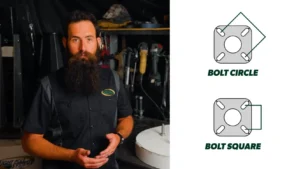
This can happen when the replacement pole has a different bolt circle, the original dimensions were measured incorrectly, or a different base plate configuration is supplied.
Before selecting a solution, verify the existing foundation dimensions using our guide to light pole bolt patterns, including bolt circle vs. bolt square.
Depending on the application, replacing the entire concrete footing may not be the only option.
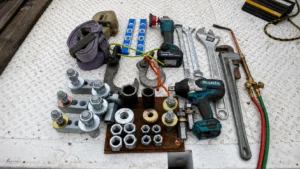
The Light Pole Systems Anchor Bolt Adapter is designed for situations where existing anchor bolts and the replacement pole base plate do not align properly. The system allows certain bolt-pattern differences to be addressed while using the existing footing when the application and existing foundation are suitable.
Determining the existing anchor bolt layout before ordering the replacement pole can save substantial time at the job site.
What If the Anchor Bolts Are Too Short?
Another condition that may become apparent after removing material from around the footing is inadequate anchor bolt projection.
Sometimes usable threads exist below the exposed surface even though the visible portion of the bolt appears too short.
Light Pole Systems offers Thread Extenders for applications where existing anchor bolts are structurally suitable but do not provide enough usable length to properly mount the pole.
Thread Extenders are not a substitute for evaluating damaged or structurally inadequate anchor bolts. The existing hardware must first be suitable for the intended application.
What If Corrosion Has Damaged the Pole Base?
Anchor bolt problems are only one issue commonly found at an existing light pole footing.
Steel poles can also experience significant corrosion near the base, particularly where moisture is repeatedly present.
If the pole itself has deteriorated, simply exposing or adjusting the leveling nuts does not correct the damaged pole section.
For appropriate applications, the Light Pole Systems Pole Repair Kit provides a repair option specifically designed for certain rust-damaged light poles.
The condition of the pole, anchor bolts, footing, and surrounding area should be considered together rather than treating each component in isolation.
Frequently Asked Questions About Light Pole Leveling Nuts
What are leveling nuts on a light pole?
Leveling nuts are installed on the anchor bolts beneath the light pole base plate on installations that use this mounting arrangement. They provide support and adjustment points for establishing the position and elevation of the base plate.
Can light pole leveling nuts be covered by concrete?
Material around the top of an existing footing can sometimes conceal the nuts and washers. Before removing material, determine whether it is nonstructural material such as dry pack or part of the structural concrete footing.
What if the existing anchor bolts don’t match the new light pole?
First confirm the anchor bolt size, spacing, condition, and replacement pole base plate dimensions. For suitable applications where the bolt patterns do not align, an Anchor Bolt Adapter may provide an alternative to replacing the existing footing.
What if the anchor bolts do not have enough exposed thread?
If the existing anchor bolts are otherwise suitable but do not provide sufficient usable length, Thread Extenders may be an option. Existing anchor bolt condition should always be evaluated before reuse.