How to Prevent Copper Wire Theft from Job Sites
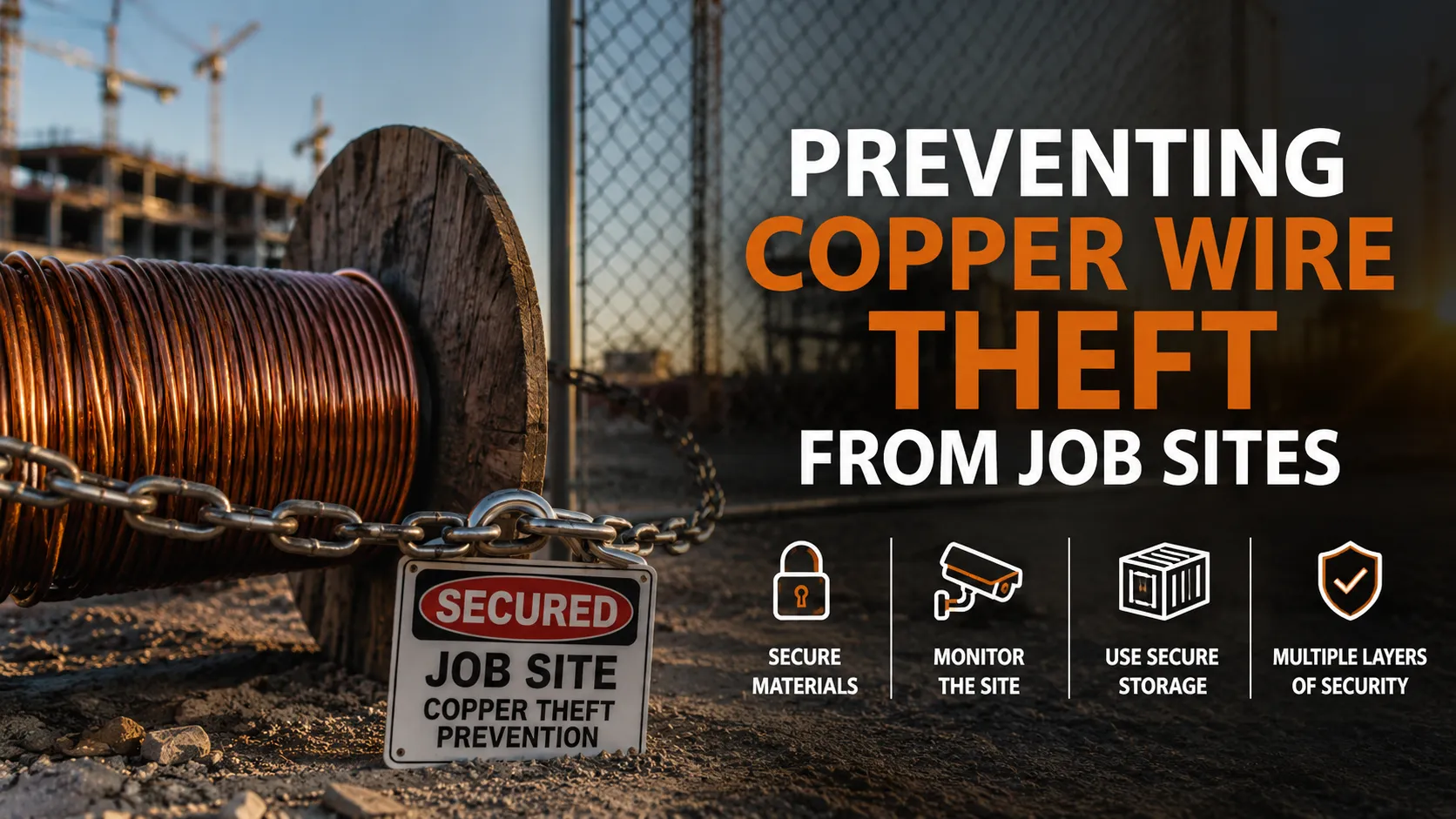
Copper theft continues to be a serious concern on construction job sites, particularly shortly after new materials are delivered and before they are installed or secured.
Common targets include copper wire spools, copper water pipe, fittings, light fixtures, and other materials made from copper, aluminum, or brass. Contractors typically take precautions to secure valuable tools in job boxes, storage bins, or locked vehicles, but construction materials waiting to be installed can remain vulnerable.
Understanding the strengths and limitations of common job-site security measures can help contractors better protect valuable materials and reduce opportunities for theft.
Temporary Fencing Has Limitations
One of the most common security measures on a construction site is temporary fencing secured with a chain and lock around the gate.
While fencing can help restrict access, it should not be considered a complete theft-prevention solution. Temporary fencing often has vulnerable areas where it terminates against a wall, building, or other structure. In some situations, these sections can be moved enough for someone to gain access.
The bottom of temporary fencing can also become a weak point. Sections may be lifted high enough for someone to pass underneath or move materials through an opening.
Temporary fencing remains important for controlling access to a construction site, but contractors should consider using additional layers of security when valuable copper and other recyclable materials are being stored onsite.
Security Guards Can Help Deter Theft
Security guards can provide another layer of protection.
Even the presence of a marked security vehicle may discourage opportunistic theft. However, security personnel also have limitations, particularly on larger construction sites.
A single guard can monitor only a limited portion of a property at one time. Regular patrol routes may also become predictable if someone observes the site over an extended period.
On larger projects, additional security personnel or other security measures may be necessary to provide adequate coverage.
Contractors should consider the size, layout, accessibility, and value of the materials stored onsite when determining how much security is appropriate.
Deploy Mobile Solar Surveillance Trailers & Live Monitoring
One of the most effective modern deterrents for active construction sites is the deployment of portable video surveillance trailers paired with 24/7 video monitoring services.
Mobile Solar Security Towers
These self-contained, solar-powered units can be towed onto a job site and deployed in minutes—even on remote sites without established power or internet infrastructure. Positioned near high-value material staging areas, their high-visibility design and flashing deterrent lights signal to trespassers that the site is actively watched.
Live Video Monitoring & Door/Security Operations Centers
Unmonitored cameras only record a crime while it happens. Partnering with live monitoring centers (such as remote guarding and virtual security services) turns passive video into proactive deterrence. When onboard AI motion sensors or thermal cameras detect suspicious activity after hours, live operators immediately review the feed. Operators can activate two-way audio talk-down speakers to warn intruders off the property or dispatch local law enforcement immediately with verified crime-in-progress priority.
Secure Materials Inside a Building When Possible
One of the most effective ways to protect new construction materials is to keep them inside a secure building.
Unfortunately, a building under construction may not yet be fully enclosed or secure enough to provide reliable storage.
When secure indoor storage is unavailable, temporary storage containers can provide another option for protecting copper wire, fittings, fixtures, tools, and other valuable materials.
Common storage options include:
- Cargo or shipping containers
- Box trailers
- Retired service vehicles
- Lockable temporary storage units
The goal is to create another physical barrier between valuable materials and unauthorized access.
Cargo Containers for Large Construction Projects
Large construction projects that require significant quantities of material to remain onsite for extended periods may benefit from a converted cargo or shipping container.
A used shipping container can be fitted with shelving and lighting to create a secure storage area directly on the job site.
Standard locks can sometimes be vulnerable, so additional protection around the locking mechanism may improve security. A welded or bolted protective enclosure can make unauthorized access considerably more difficult.
The primary disadvantages are transportation costs and the need to store the container between projects.
For larger contracting companies that regularly work on major projects, however, a secure cargo container can be a practical long-term investment.
Box Trucks and Service Vehicles for Onsite Storage
A retired service truck or box truck can also be converted into secure onsite storage.
These vehicles provide enclosed storage and can be moved between projects as needed. Contractors should, however, consider any registration, insurance, maintenance, and storage requirements associated with keeping a vehicle onsite.
Depending on the project and location, a trailer may provide a more flexible alternative.
Box Trailers Offer Flexible Job-Site Storage
A box trailer can provide secure, mobile storage for contractors who frequently move between job sites.
Trailers can be locked and configured with shelving or other storage systems to accommodate different types of tools and construction materials.
Their mobility makes them particularly useful for contractors working on multiple projects because the same storage system can travel from one project to another.
A trailer can also be branded with company information, allowing it to serve as company identification and advertising while onsite.
Use Multiple Layers of Job-Site Security
There is no single security measure that can eliminate construction-site theft in every situation.
Temporary fencing, security personnel, secure buildings, cargo containers, service vehicles, and trailers all provide different levels of protection.
The most appropriate approach depends on factors such as:
- The size of the construction project
- The amount and value of material stored onsite
- How long materials will remain onsite
- Site accessibility
- Local theft and vandalism risks
- Whether secure indoor storage is available
Using several layers of security can make valuable materials more difficult to access and can reduce opportunities for theft.
Protecting Copper Wiring After Light Pole Installation
Copper theft can remain a concern even after exterior lighting equipment has been installed.
For more background on light pole access openings and hand holes, see our guide to light pole hand hole access and other pole components.
For installations where theft and vandalism are a concern, Light Pole Systems offers the Universal Locking Hand Hole Cover to help secure light pole access points.
Light pole access openings can provide a potential point of access to internal wiring when they are not adequately secured.
The Universal Locking Hand Hole Cover can also be paired with a light pole combo lock for controlled access to the hand hole.
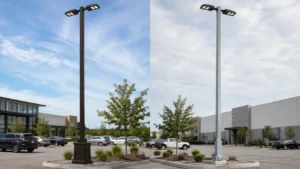
Contractors working on new exterior lighting projects can also explore custom light poles and other Light Pole Systems products designed for commercial lighting applications.
Have a Job-Site Security Idea to Share?
There are many ways contractors can improve job-site security, and different projects may require different approaches.
If you have found another effective method or product for preventing copper theft or securing light pole components, Light Pole Systems would be interested in hearing about it.
Contact Light Pole Systems to share your experience or ask about products designed for light pole security and related applications.
We pride ourselves on providing excellent customer service and look forward to helping you with any of your light pole needs.
Get a Quote